Products
Explore all platforms & products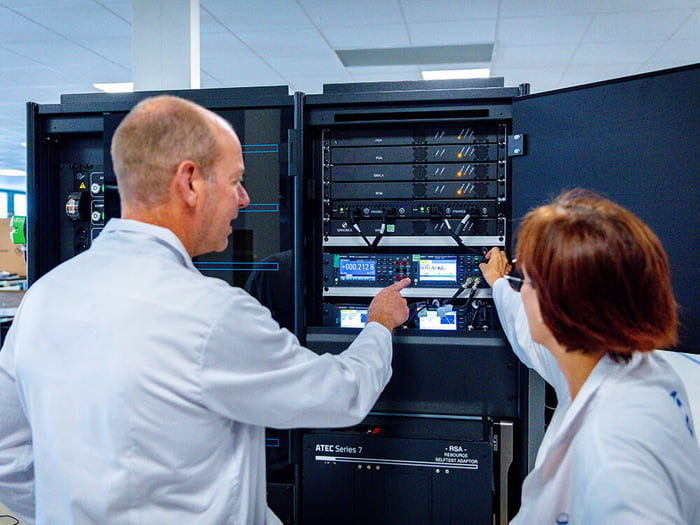
Our flexible test platforms are built on proven architectures with integrated IP, enabling maximum reuse and faster deployment for product design, manufacturing and support.
Find the right platform for your application- AST-1000 - Averna Signal TesterSoftware-defined infotainment RF signal source
- DNA SeriesDigital phase noise & stability analyzers
- ESUS – RF Detection and Identification SystemPortable RF detection, 30 MHz–6 GHz
- RP-6500 - Wideband RF Record & Playback System500 MHz signal capture & GNSS simulation
- Wideband RF Up & Down ConverterUp to 40 GHz with 2 GHz bandwidth
- Protection Jammer TesterGo/no-go checks for RF jammers
- VeriDASEnd-to-end test of aircraft DAS suites
- Power Quality AnalyzersClass A power quality analyzers for utilities, grid operators and industry
- PLUTON Series®Power emulation platform for real-time validation testing of electrical systems
- Linear Power AmplifierPrecision linear AC/DC power supply solution
- MAGSET® SeriesAutomatic magnetic adjustment solution for differential relays and circuit breakers
- Proligent™ - Test Data AnalyticsSmart test data management & reporting
- NewWaveX®Automated test generation for complex systems
- Averna DeployAutomated test code deployment at scale
- Shopfloor Test Management PlatformEnd-to-end test lifecycle management
Resources
Visit our Resource Center
Flexible Test Platform Solutions
For more than 25 years, Averna has been designing and delivering advanced test platforms for industries where quality, speed and precision are critical. Our flexible systems are built on proven architectures with integrated IP, enabling maximum reuse and faster deployment.
Whether you need to assemble optical modules with sub-micron precision, validate EV power components under demanding safety standards, or run end-of-line functional tests for high-volume electronics, our platforms can be tailored to your application. Each solution is engineered for seamless integration, compliance with industry regulations, and long-term scalability, so you can accelerate time to market and maintain product excellence.



Active Alignment Assembly and Test Platform
Use a semi or fully automated active alignment solution to quickly assemble camera & LiDAR modules, MEMS devices, die-based sensors, LED and laser-based headlights, and other high-end products with supreme sub-micron accuracy. This optical module calibration platform integrates machine vision guidance and precision robotics to ensure reliable alignment and optical performance for mass production. Discover which automated quality solution best fits your manufacturing requirements.
- Achieves sub-micron alignment for optical and LiDAR modules
- Integrates machine vision for precision guidance
- Supports semi- or fully automated assembly workflows
ATEC ATMOS®
ATEC ATMOS is an open test platform designed to support avionics, sensors and actuator testing. It integrates easily into existing IT ecosystems while enabling reuse of legacy test programs.


ATEC Dyna Series®
ATEC Dyna Series® is a scalable automatic test equipment (ATE) solution engineered for the production testing of avionics systems. It is specifically designed to support batch manufacturing of Line Replaceable Units (LRUs), where minimizing downtime between production runs is critical. This platform enables manufacturers to efficiently validate complex electronic equipment while maintaining high throughput and reliability. The system supports both civil and military aerospace applications, including engine control units and PCBAs. With high-performance instrumentation and modular architecture, it is adaptable to evolving avionics technologies and production requirements.
ATEC® Series 7
ATEC Series 7 is a next-generation avionics MRO test solution used by airlines, OEMs, and maintenance providers to ensure conformity of critical electronic systems. It supports testing, diagnostics, and return-to-service validation across a wide range of aircraft LRUs.

Batterie Inspektor™
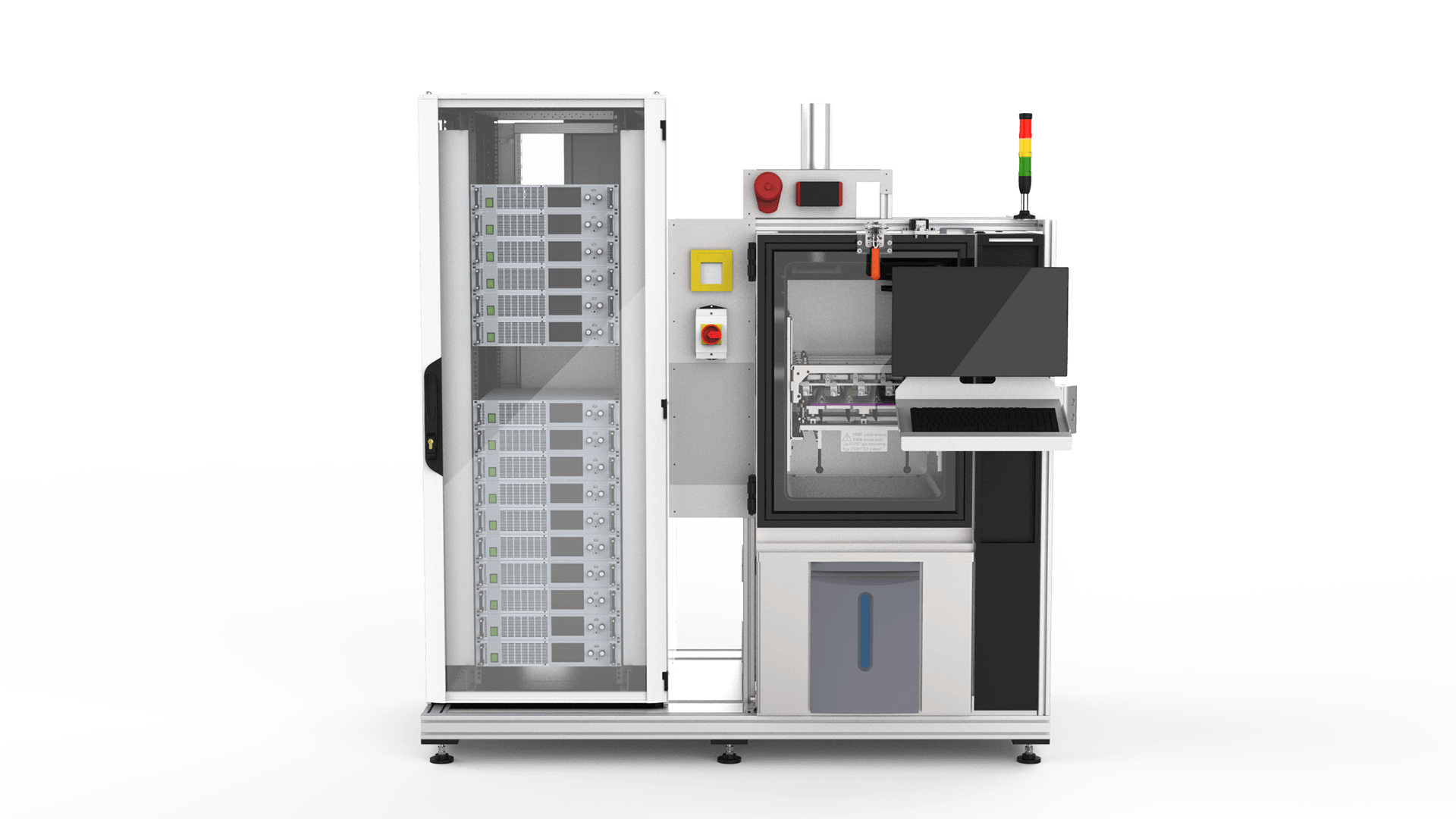
Don't leave battery test to chance. With Batterie Inspektor™, you get the results you need with an established platform for battery cell testing, module validation, and BMU (Battery Management Unit) verification. The system supports DC internal resistance measurement, charge/discharge profiling, and end-of-line battery testing to ensure safety, performance, and compliance with automotive standards.
- Validates cells, modules BMUs and complete batteries for performance & safety
- Automates functional, electrical and EOL testing
- Configurable for your specific battery production line
DITE - HIL Test Platform
DITE is a real-time hardware-in-the-loop (HIL) test platform for the integration and validation of embedded systems. Running the U-TEST® real-time operating system on an integrated CPU, it executes MATLAB/Simulink and SCADE models against real hardware, so integration issues surface early. Built-in power distribution and signal adaptation reduce external hardware and footprint. Interface coverage includes analog and digital I/O, Ethernet, CAN, ARINC 429, AFDX, MIL-STD-1553 and RS-232/422/485 serial links, plus RVDT and LVDT sensor simulation. Multiple HIL nodes can be distributed across a setup, and the platform is available in 19-inch rack and ARINC 600 formats, among others. DITE enables rapid test iteration and efficient execution of simulation models, helping teams accelerate development cycles with high accuracy and control.
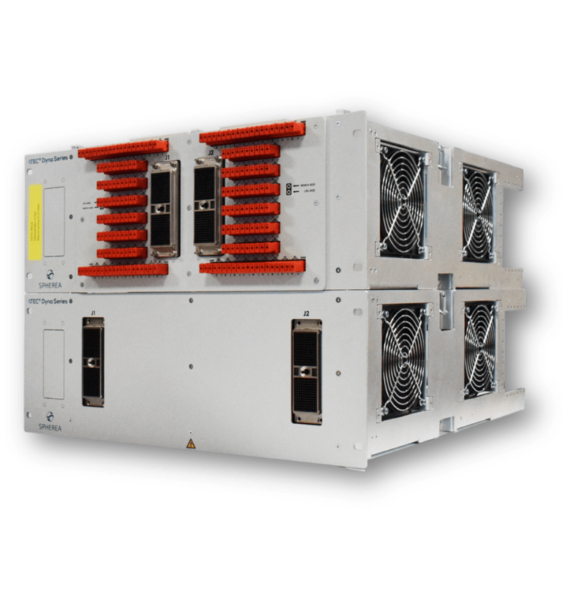
DynaBlock® – Automated Test Switching System
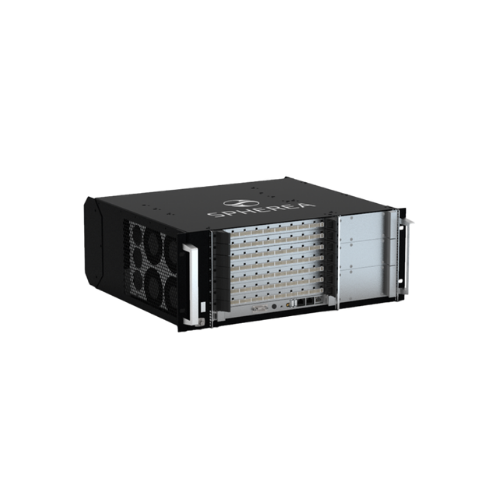
DynaBlock® is a compact automated test switching system that consolidates switching resources and signal management in a single rack-based platform. Its 4U, 19-inch chassis holds a 120 x 54 matrix serving up to 500 DUT pins, and up to five units stack as signal counts grow. Removing interconnect cabling between break-out panels, switching cards, load racks and instrumentation simplifies maintenance and can cut system cost by up to 15%. Built-in self-test checks system health without external equipment, while hardware fault injection and a dynamic electrical network generator speed up configuration. Test sequences are developed in the FEATS IDE.
EFEM Platform
Our EFEM Platform can act as a standard EFEM, or can be customized to suit your application’s cleanliness, handling technique, throughput, and form-factor requirements. From design to manufacturing, we offer units in varying complexity and precision.
- Maintains ultra-clean handling for wafers and substrates
- Customizable for throughput, precision and cleanliness
- Compatible with SMIF pods, FOUPs and robotic transfer systems

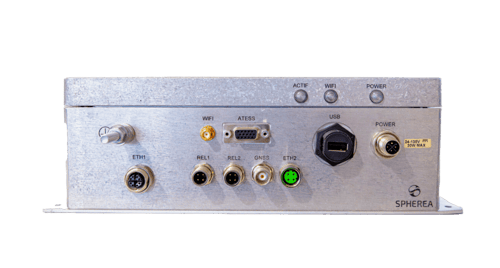
ESVE - Embedded Overspeed Protection
ESVE is an embedded safety system that protects high-speed trains during test runs, when normal onboard safety functions are disabled or bypassed. This monobloc unit monitors train speed against track position autonomously and engages emergency braking as soon as overspeed is detected. Developed with SNCF, the system was recently redesigned to resolve component obsolescence on the latest platform. ESVE runs U-TEST® real-time firmware, which executes customer Simulink® models with direct access to hardware I/O. Certification covers EN 50155, EN 50121-3-2, EN 45545, EN 61373 and EN 50153, and the hardware can serve as a baseline for similar railway applications.
ETCS Certification Bench
The ETCS Certification Bench is a modular platform for validating and certifying European Train Control System (ETCS) onboard equipment, with maintenance testing handled on the same bench. Powered by the U-TEST® real-time engine, it simulates complete train and trackside environments around the European Vital Computer (EVC) under test. The bench supports all major EVC configurations and covers ERA requirements such as Subset-076 and Subset-111. Fully automated ERTMS test workflows reduce manual effort during certification campaigns, while an open software architecture keeps the platform adaptable as railway specifications evolve. It serves equipment manufacturers as well as certification authorities.
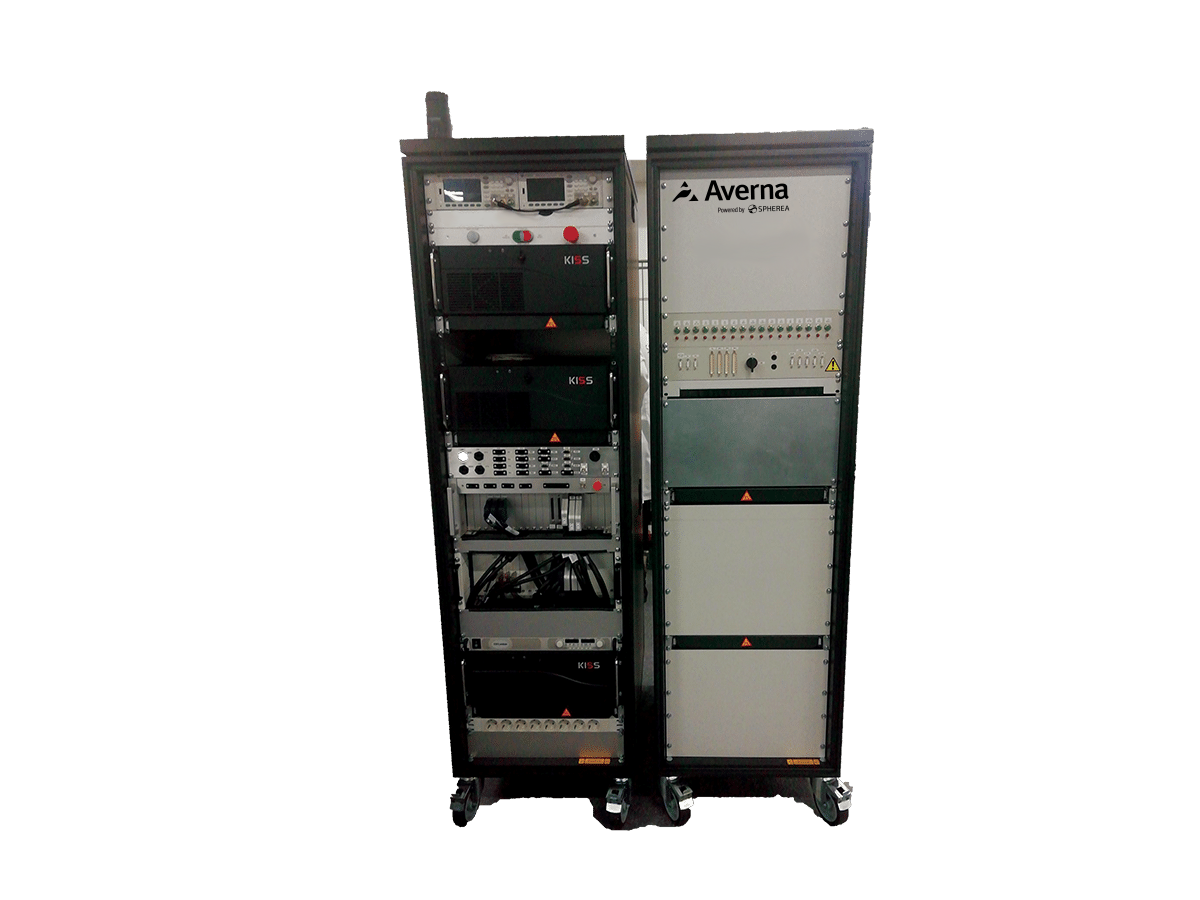

Electric Vehicle Power Components EOL Test Platform
Regardless of your EV power component application, trust Averna’s test expertise to accelerate time to market. With a customizable and fully scalable EV EOL test platform, automate high-voltage functional testing, insulation resistance checks, CAN/LIN communication verification, leakage detection, and IP67 ingress protection validation. It also supports visual quality verification and laser markings for a complete compliance-ready solution.
- Performs high-voltage and functional EOL testing
- Validates safety, communication and environmental compliance
- Fully scalable for different EV ECU modules
EVSE Test Platform
This EVSE test platform combines the right energy regeneration equipment with more than 25 years of test experience. Manage both the challenging high-power requirements of electric vehicle supply equipment and the automotive market demand with a test system that performs to your specs. Integrated microgrid management and OCPP communication ensure robust asset connectivity and effective high-power simulation.
- Handles high-power EVSE testing with energy regeneration
- Simulates protocols including NACS, CHAdeMO, CCS and GB/T
- Integrates microgrid management and OCPP communication


Headlamp Test Platform
A customizable and flexible photometric vision solution framework for automotive headlamp testing to meet a range of requirements. It tests a variety of parameters including electrical tests and communication tests. Photometric hardware variants include, complete headlamp testing, module testing and module absolute photometry for ECE and SAE compliance.
- Measures beam patterns and luminous intensity to standards
- Tests electrical, optical and communication parameters
- Configurable for complete headlamp or module-level testing
IED Test & Validation Platform
The IED Test & Validation Platform verifies intelligent electronic devices (IEDs) and IEC 61850-based substations throughout their lifecycle. It checks interoperability and communication between IEDs and the infrastructure systems around them. Digital and analog simulation, with generation and measurement capabilities, recreates I/O and communication environments for configuration verification. A Python-based, template-driven automation framework standardizes test campaigns, with results followed on a real-time dashboard. Existing third-party instruments can be integrated rather than replaced, protecting earlier hardware investments. Utilities and energy operators use the platform for engineering validation as well as maintenance testing.
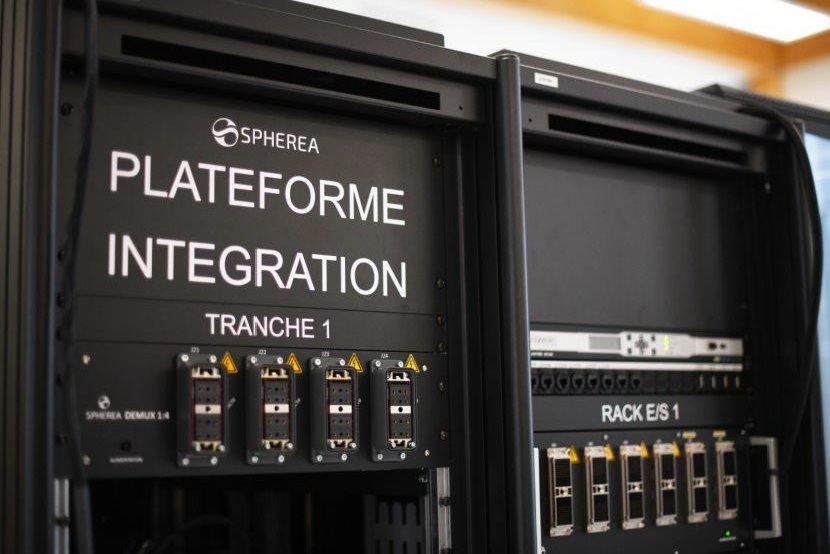
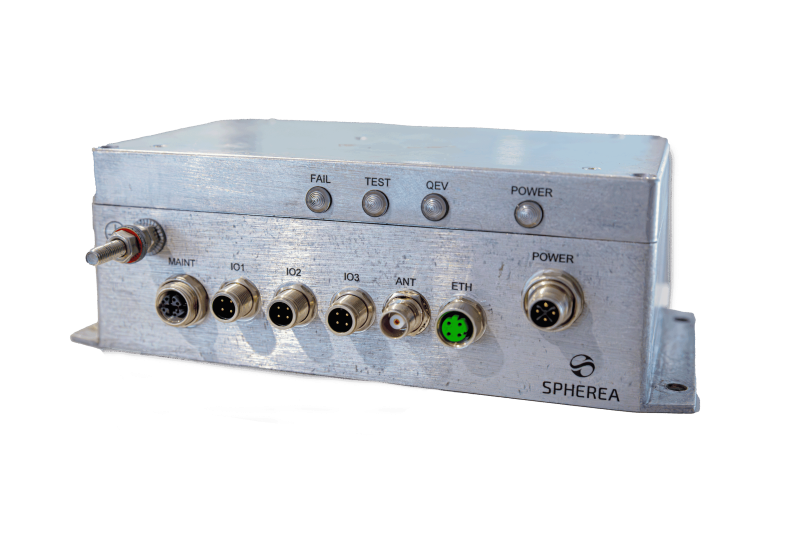
KARM-NG – Continuous TVM Armament Monitoring
KARM-NG provides the only proven, in-service solution implementing mandatory continuous Transmission Voie-Machine (TVM) armament control for trains operating on French high-speed lines (LGV). Secured GNSS localization gives the onboard unit an independent position reference, so it confirms that TVM protection remains active beyond trackside transition points and restores control after an onboard reset. Built on U-TEST® real-time technology, this railway-qualified platform also records operational data for maintenance and post-event analysis. Certification covers EN 50155, EN 50121-3-2, EN 45545, EN 61373 and EN 50153. Developed with SNCF, KARM-NG is already deployed on TGV trains in commercial service.
Lens Module Test Platform
The Lens Module Test Platform is a flexible solution to deliver the quality that is expected from your brand for all types of lenses and cameras. The system can be configured to measure objective, eyepiece or camera lenses. It supports MTF (Modulation Transfer Function) measurement, autofocus calibration, FOV (Field of View) verification, and distortion mapping to ensure optical performance meets stringent brand and industry requirements.
- Evaluates MTF, FOV and optical distortion in lenses
- Supports objective, eyepiece and camera lens testing
- Ensures optical performance meets brand standards


NTS Platform
A smart industrial measuring and evaluation system for complex, non-contact product inspection through non-destructive testing (NTS). Typical applications include mass production of air conditioning units, pumps or small electric motors, where errors in assembly can cause malfunctions or significantly shorten service life.
- Performs non-contact, non-destructive product inspection
- Detects defects, dimensional errors and assembly issues
- Suitable for high-volume industrial production lines
PLUTON Series®
PLUTON Series® is a four-quadrant AC/DC power emulator for real-time validation of power electronics and electrical networks. Built from 40 kW modules, cabinets deliver 120 kW or 240 kW at up to 750 V DC, or 1,500 V in series configuration, with current reaching 1,200 A in parallel. Rise times down to 50 µs and a 20 kHz small-signal bandwidth reproduce fast transients and fault conditions. An AMD Aurora 5 Gbps interface, enables power hardware-in-the-loop (PHIL) setups. Built-in battery and fuel cell models support BMS and ESS validation.

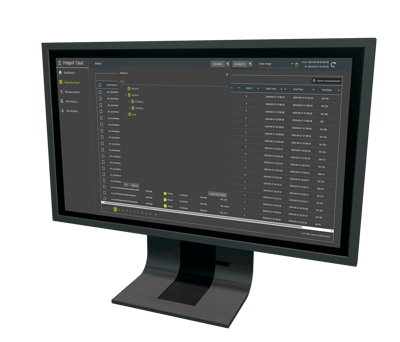
Rapid Prototyping Platform
The Rapid Prototyping Platform lets engineers validate algorithms and embedded applications on hardware designed for deterministic real-time operation. Built on the U-TEST® real-time software-in-the-loop (SIL) platform, it deploys simulation models directly onto embedded hardware and maps model variables automatically to physical electrical signals. A cybersecure embedded web interface monitors I/O and operational status in real time, while user-configurable dashboards turn that data into custom graphical applications. Because the development and deployment environment stays the same as capabilities expand, a validated prototype can grow into a complex real-time application without a change of toolchain.
SESAR® 3000 – Defense Maintenance Test System
SESAR® 3000 is a family of generic, scalable maintenance test benches for electronic and optronic defense equipment. A single bench handles troubleshooting and post-repair conformity checks on a wide variety of Line Replaceable Units (LRUs), No Fault Found (NFF) cases included. It isolates faulty components at LRU and Shop Replaceable Unit (SRU) level. Benches run in fixed workshops or deploy to theaters of operation in joint and multi-weapon-system contexts. French Armed Forces use SESAR 3000 to support platforms such as the Rafale, NH90, Leclerc, Griffon and Jaguar. Long-term support is planned over 30–50 years, keeping legacy and current programs on one test solution.
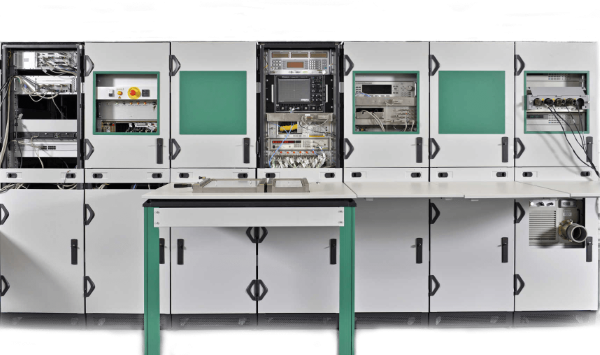
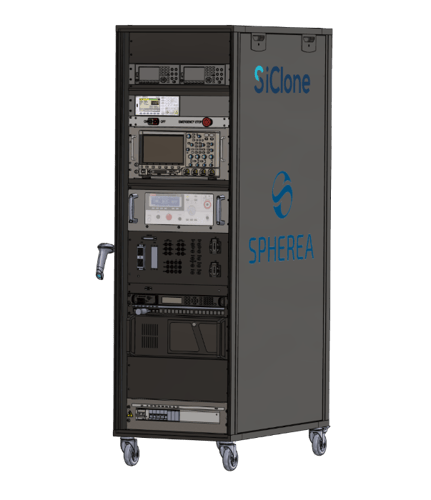
SiClone - Obsolescence Management Platform
SiClone is a modular avionics test platform that replicates the behavior of obsolete test systems, so validated test programs can run without modification and certified procedures stay intact. Built on commercial off-the-shelf (COTS) hardware in a compact 19-inch rack, it replaces multiple standalone instruments with one common set. This reduces calibration overhead and simplifies spares management. Teams can start with manual testing and add automation progressively as requirements and budgets grow. SiClone validates aircraft LRUs such as flight computers and navigation systems, and its portability lets technicians troubleshoot on the hangar floor during scheduled maintenance. Built-in result tracking supports traceability.
SiLoNT – Sonar Test System
SiLont is a modular sonar test system that validates sonar arrays at each manufacturing stage, with the same platform qualifying individual transducers as well as fully integrated arrays. Acoustic face assemblies can be checked before and after system integration, and fast dockside testing supports operators once the array is installed. An ultra-low noise floor delivers high-fidelity measurements, while in-air test capability reduces cost and environmental constraints. Consolidating several test functions in one configurable system removes the need for bulky multi-system setups, so defects are caught early in production. High-capacity removable storage holds terabytes of test data for later analysis.
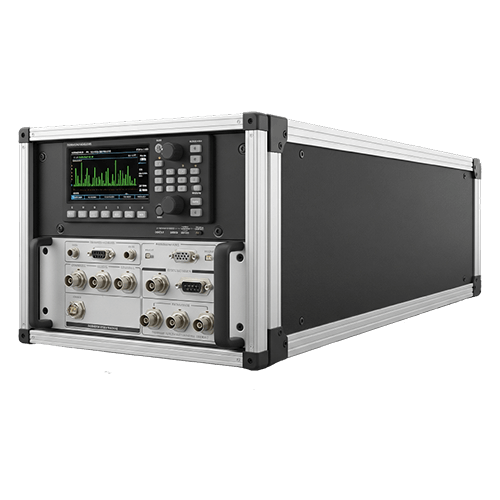
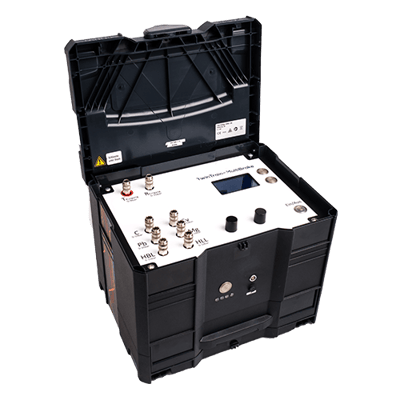
TwinTrain-MultiBrake
TwinTrain-MultiBrake tests railway braking systems by measuring all relevant parameters simultaneously across every brake controller of a full train. Battery-powered measuring modules mount directly on the brake controllers and draw on the vehicle's own compressed air, eliminating the need for an external air supply or long hose. A central control unit communicates with each module over a rugged wireless link, acquiring data in real time and detecting brake application and release automatically. Each module offers 10 compressed air connections with a 0–10 bar range and ±50 mbar accuracy, with a runtime above six hours. Test sequences can be programmed to manufacturer specifications.
TwinTrain-Traction
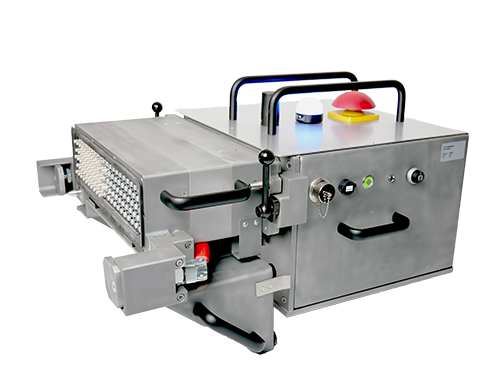
TwinTrain-Traction simulates a coupled rail vehicle electronically and mechanically, so maintenance teams validate coupling functions without mobilizing a second train. It reproduces the interfaces and signals a second vehicle would normally provide, enabling dual-traction mode tests and functional checks of electronic couplings during commissioning and maintenance of streetcars and mainline trains. Technicians run customizable automated test sequences from a tablet over a wireless link, either at the coupling or remotely. The system retrofits into existing vehicles without significant structural modification. Built on the UTMS platform, it is designed for long-term availability over a decade.
TwinTrain-Workshop
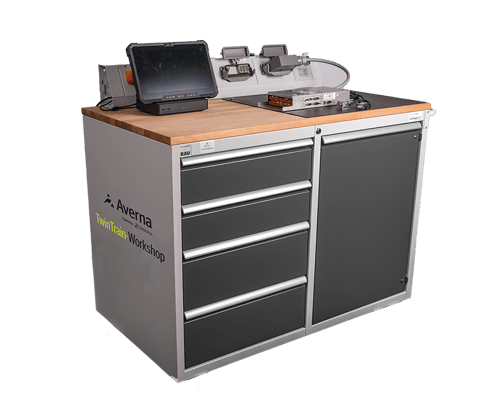
TwinTrain-Workshop is a universal test platform for the electrical and electronic components of rail vehicles. Because many of these devices share similar interfaces, generic measurement and stimulation electronics cover them all. Components can be tested on the vehicle or as standalone units in the depot or maintenance workshop. Test scope adapts to each application, whether basic functional checks for quality assurance or in-depth diagnostics and troubleshooting. Automated sequences generate digitized test reports, and dedicated test solutions can be combined with the platform for end-to-end coverage.
UniLine: The Universal In-Line Test Platform
Regardless of industry or application, trust Averna to accelerate time to market with UniLine. A customizable and fully scalable test platform for electronic testing, UniLine will automate all safety, functional, ICT (In Circuit Test), EOL (End Of Line) tests as well as, part labeling and programming operations for partial or final electronic assemblies. Select only the functionalities required for the application or link multiple systems together for a total solution.
- Combines ICT, functional and programming tests in-line
- Fully scalable for electronics production volumes
- Automates labeling, inspection and data logging


U-TEST® – Software-in-the-Loop (SIL) Test Platform
U-TEST is a real-time simulation and validation platform designed to support model-based development from design through final acceptance. It enables continuous end-to-end validation of complex systems, ensuring consistency across the entire development lifecycle.
With its open architecture and advanced integration capabilities, U-TEST allows engineers to build, simulate, test, and validate software across multiple domains, including aerospace, automotive, railway, and energy.
Virtual, Augmented and Mixed Reality Calibration Platform
AR, VR and MR are playing a major role across a variety of industries. Proper device calibration is critical for product performance. This platform efficiently calibrates IMUs, stereo cameras, and optical sensors, ensuring precise six degrees of freedom (6DoF) tracking, low latency, and accurate pose estimation for immersive devices. Designed for repeatable, high-accuracy alignment in production environments.
- Calibrates IMUs, stereo cameras and optical sensors
- Ensures accurate 6DoF tracking for AR/VR/MR devices
- Designed for fast, repeatable and precise alignment
