Averna camera testing solutions are designed to evaluate each stage of the imaging chain while maintaining controlled and repeatable test conditions.
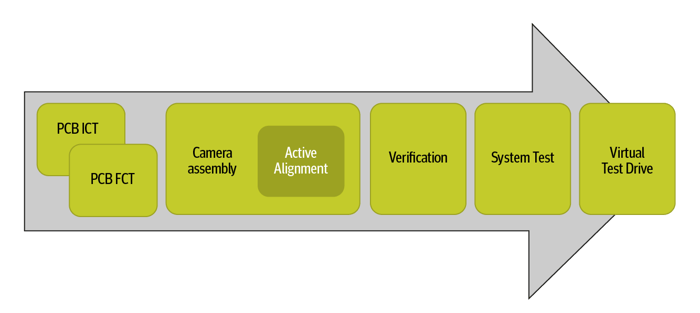
Image Quality Testing
Image quality testing ensures that camera modules capture accurate and consistent visual information under controlled conditions. Averna platforms support image quality testing of camera lenses and sensors by evaluating how optical components and image sensors respond to calibrated illumination and standardized optical targets.
Typical validation activities include:
- Color calibration and white balance calibration
- Sensitivity testing, noise testing and signal-to-noise ratio measurement
- Dynamic range testing and HDR performance validation
- Dead pixel testing, hot pixel testing and pixel defect detection
- Uniformity testing, homogeneity testing and shading correction testing
- Blemish detection testing and stray light analysis
- MTF testing (modulation transfer function) and spatial frequency response testing
- Grid distortion testing, flare testing and lens distortion measurement
- Field of view calibration and optical performance characterization
Additional validation workflows may include flash testing, color testing configuration and RS-485 remote interface verification depending on the camera architecture.
Optical Alignment and Lens Adjustment
Precise optical alignment is critical to ensure that camera modules deliver accurate focus and stable imaging performance. Even small deviations in lens positioning or sensor alignment can affect image sharpness.
Averna platforms support advanced optical alignment testing and active alignment testing used during camera module assembly. These processes rely on optical targets and feedback measurements to precisely position lenses relative to the image sensor.
Typical optical alignment validation activities include:
- Lens tilt and alignment testing and XY-Phi planarity testing
- Optical collimator testing for finite to infinite focus testing
- Autofocus testing and focus calibration validation
- Active alignment using optical targets and real-time image feedback
- Alignment offset correction using grid-based measurement systems
- Optical verification of glue dispensing and lens positioning in X, Y, Z and rotational axes before IR curing
These processes ensure that optical modules remain correctly aligned and that camera systems maintain consistent imaging performance across production units.
Interface & System Integration Testing
We support camera interface validation across a wide range of industry standards used in embedded imaging systems. Our test environments allow engineers to evaluate communication behavior and verify that camera modules operate correctly within the broader system architecture.
Typical interface and system integration validation activities include:
- GMSL camera testing used in automotive camera architectures
- MIPI CSI-2 camera testing commonly used in embedded and mobile devices
- FPD-Link camera testing and LVDS camera testing for high-speed video transmission
- GigE Vision camera testing and Ethernet camera testing used in industrial vision systems
- Frame rate validation and latency measurement across video transmission pipelines
- Image acquisition validation to confirm stable video stream delivery to processing units
These validation workflows help ensure that camera modules communicate reliably with processing electronics and maintain stable performance once integrated into the final device.
Image Signal Processing Pipeline (ISP)
The image signal processing pipeline plays a central role in transforming raw sensor data into usable visual information. Once the image sensor captures light, the Image Signal Processor (ISP) applies a series of processing steps that convert the raw signal into a final image suitable for analysis or display.
Averna solutions support ISP validation testing to ensure that image processing algorithms operate correctly within the complete camera architecture. This includes verification of image signal processing pipeline behavior across different operating conditions and system configurations.
Through controlled image acquisition and reference test patterns, we can confirm that processed image data remains consistent once integrated with the surrounding camera electronics and software environment.
Production Camera Testing and Calibration
Once a camera architecture has been validated during development, manufacturers must ensure that each produced unit delivers consistent imaging performance. Production camera testing verifies that every camera module meets its optical and electronic specifications before integration into the final product.
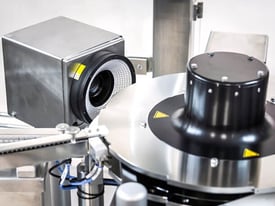
Averna platforms support camera module end-of-line testing using calibrated illumination systems such as integrating sphere illumination and high-precision light sources. These controlled environments allow engineers to perform camera calibration testing while maintaining stable and repeatable measurement conditions.

 Modern devices increasingly rely on embedded imaging systems to capture and interpret visual information. Validating these systems requires much more than confirming that a camera produces an image. Camera module testing evaluates the entire imaging chain, including the optical system, the image sensor, acquisition electronics and the processing pipeline responsible for converting raw sensor data into usable visual information.