A Smarter Environmental Screening Process for Production Reliability

Not every failure is visible at end-of-line. Latent defects can survive initial testing, then emerge later as early life failures in the field. It is important to consider where these products will be and how they will be treated...to the extreme. That is where ESS creates value.

ESS is a reliability screening method that applies controlled environmental stress to expose hidden failure mechanisms before products reach the field.

Averna develops production screening test solutions and automated test platforms that align screening with real product risks and reliability goals. The result is a more effective environmental screening process with better defect detection; and reduced Cost of Quality (CoQ).


What ESS actually finds

  • Solder joint cracks and cold solder joints
  • Marginal components and component defects
  • Assembly-induced stress and PCB stress failures
  • Intermittent electrical faults that escape initial testing
  • Reactions to real-world or extreme environmental conditions

Averna’s ESS Procedure

Every ESS implementation starts with one question: what failures are we trying to accelerate without damaging good units? We design screening strategies that target real manufacturing defects while preserving product integrity and production throughput.

  1. Phase 1

    Product & Risk Assessment

    In collaboration with our customers. we begin by reviewing the product architecture, manufacturing process, and likely defect mechanisms. This helps define where latent failures are most likely to appear and what stresses are relevant.

  2. Phase 2

    ESS Profile Definition

    If the screening profile is not already defined (for example in mission critical applications), we develop one based on the product’s real operating, handling, storage, and transportation conditions. Stress levels are selected to precipitate defects without damaging conforming units.
  3. Phase 3

    Controlled Stress Application

    The selected environmental stresses are applied in a controlled and repeatable sequence. Depending on the DUT, this may include temperature cycling, random vibration testing, high temperature humidity, shock, HALT/HASS testing, radiation exposure, vacuum testing, or combined stress conditions.

  4. Phase 4

    Functional Verification & Feedback

    Units are verified before, during, and after screening to confirm performance and identify failures. Screening data can then be fed back into manufacturing and quality teams to support corrective action and reliability improvement.

Industries We Support with Environmental Stress Screening

Our test programs have been validated across a wide range of industries where we regularly work. This gives us strong expertise in the following areas:

Icone-Aerospace and Def

Aerospace & Defense

Screening of mission-critical electronics and embedded systems where early-life failures are unacceptable. ESS profiles aligned with high-reliability program requirements and long product lifecycles.

Icon - Life sciences

MedTech Devices

Reliability screening for diagnostic and therapeutic systems, ensuring stable performance under thermal and mechanical stress while supporting validation and traceability requirements.

Icon - Automotive and Transportation

Automotive, EV Systems & Transportation

Screening of electronic control units (ECUs), battery systems, and power electronics exposed to harsh environmental conditions and repeated thermal and mechanical loading.

Icon - Consumer Electronics

Consumer Electronics

Inline and EOL ESS testing strategies designed for high-volume production, targeting intermittent failures and minimizing RMA costs.

Custom ESS Test Chambers for your Product Line

Whether you need a standalone ESS chamber, an integrated vibration and thermal platform, or a fully automated production screening solution, Averna can help define the right architecture for your line.

Discuss your ESS Application

Engineering Robust ESS Profiles & Systems

Environmental Stress Screening is not meant to validate a design from scratch. Its role is to precipitate latent manufacturing and workmanship defects before the product reaches the field. To do that effectively, the screening profile must be built around the product’s actual lifecycle conditions.

That includes transportation shocks, storage conditions, handling events, and in-service operating environments. The device under test is configured to match those phases as closely as possible, whether that means screening in shipping configuration or under powered operational conditions.

Screening parameters

Screening effectiveness depends on how the profile is engineered. Temperature range, dwell time, transition rate, vibration intensity, test duration, and sequencing all influence whether the screen will activate marginal defects or simply add time without improving defect detection.

Selecting the Right Stress Mechanisms

Among the available stress mechanisms, thermal cycling and random vibration are often the most effective at precipitating latent defects.

  • Temperature cycling can expose weaknesses linked to material expansion mismatch, marginal interconnects, or assembly-induced stress.
  • Random vibration is especially valuable for revealing workmanship issues and mechanically sensitive failure modes that may otherwise remain intermittent until field use.
  • Additional stresses such as thermal shock, humidity, sine vibration, multi-axis vibration, or pressure may also be incorporated when they reflect the product’s actual environment.

Pass/Fail Logic: ESS Paired with Functional Validation

ESS is only meaningful when paired with verification. Functional testing and visual inspection should be performed before, during, and after screening to confirm that the unit remains within specification and that stress has not pushed it beyond its design limits. A unit showing cracked boards or other signs of over-stress is considered a failure even if it still appears to function electrically.

Organized Test Data for thorough Gage R&R

Throughout ESS, Proligent™ is available to simplify gage R&R by automatically organizing test data across units, cycles, and stress conditions.

By centralizing results and preserving context such as configuration, operator, and test setup, Proligent reduces the manual effort required to prepare data for repeatability and reproducibility studies. This allows teams to quickly assess measurement consistency during ESS and focus on results rather than cleaning data.

Case Study

ESS for Mission‑Critical Military Electronics

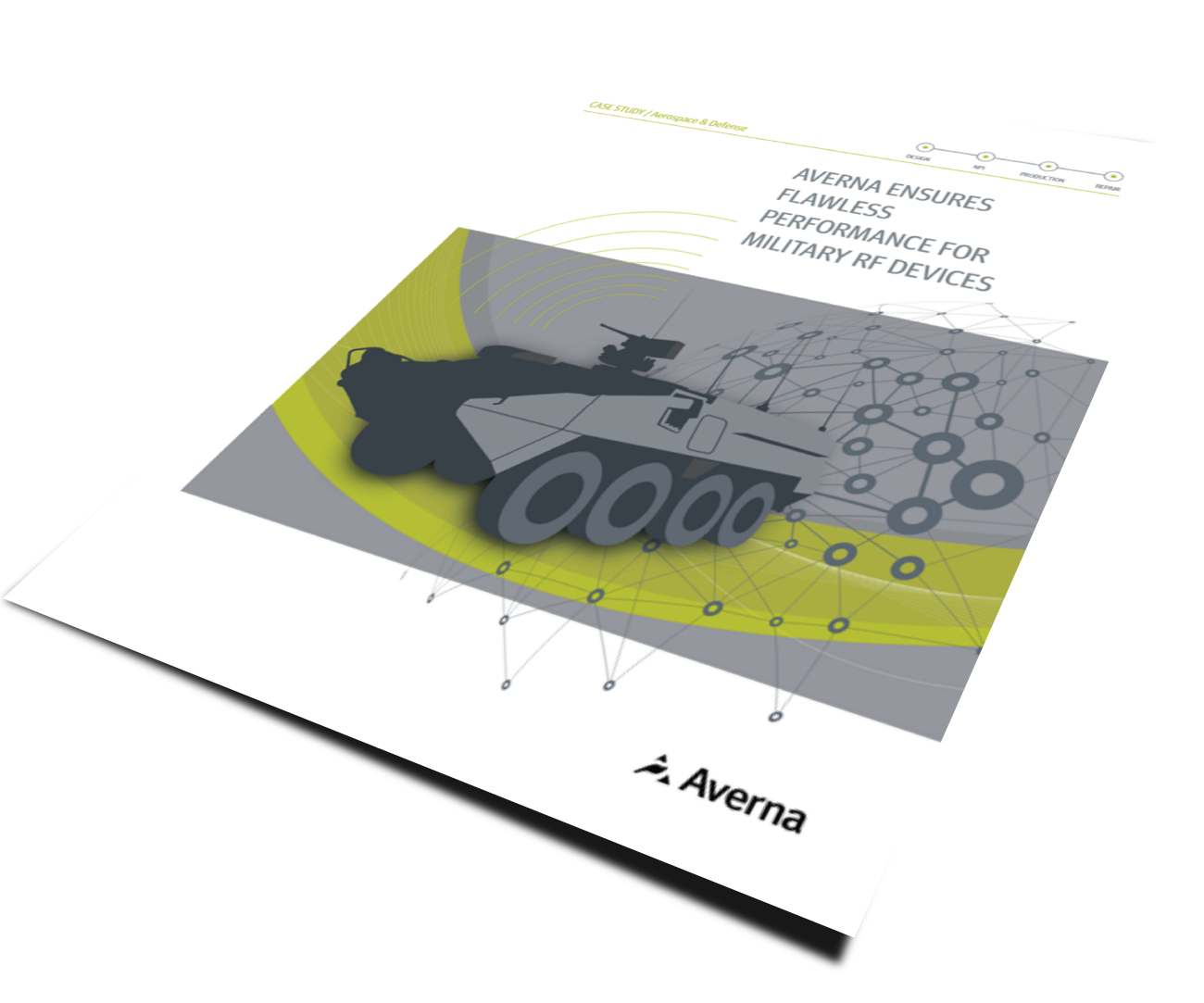
Cover - Averna Ensures Flawless Performance for Military RF Devices

In the aerospace and defense sector, a leading military equipment supplier partnered with Averna to integrate Environmental Stress Screening (ESS) into the validation of RF communication and power distribution systems.

The goal was to detect latent defects early and ensure reliable performance under extreme operational conditions, including extreme temperatures, vibration, shock, and electromagnetic stress found in land‑based military vehicles.

  • ESS applied at the Circuit Card Assembly (CCA) level, prior to final assembly, enabling early defect detection.
  • Automated batch and parallel execution using NI TestStand™ architecture to maintain production throughput.
This approach improves field reliability by identifying defects before final integration, while maintaining production efficiency through automated and scalable test workflows.

Ready to Build the Right ESS Screening Test Strategy?

Averna designs environmental stress screening chambers around real manufacturing risks and line constraints, so you can reduce field failures without slowing production. Our +25 years of experience can assure you we’ll be the right partner.