Why HIL Simulation Matters

Modern embedded systems rarely fail because one component is defective. They fail because interactions between software, electronics, communications, sensors, and physical systems behave unexpectedly. HIL exists to expose those interactions before products reach the field.

Averna views HIL not as a standalone activity, but as part of a broader validation continuum spanning model-based development, software-in-the-loop (SIL), hardware-in-the-loop (HIL), system integration, and manufacturing test. HILsimulation sits at the hardware end of the XIL (MIL, SIL, PIL, etc.) spectrum: the controller runs against a live plant model, sometimes a full digital twin, instead of a static set of inputs.

Averna Powered by Spherea gives you the ability to combine HiL, real-time simulation, instrumentation, RF, vision, automation, and quality data into one validation program. This allows complete systems to be validated under realistic operating conditions while reducing prototype costs and accelerating development.

That integrated approach is built for mission-critical applications and the next generation of embedded and connected products. Averna's HiL solutions help you:

  • Catch defects earlier through repeatable, controlled testing
  • Validate behavior in rare or hazardous operating conditions that are hard to reproduce physically
  • Prove safety and reliability before deployment
  • Reduce unnecessary hardware and equipment
  • Scale validation through automation and reusable test architectures
How Averna Approaches HIL Testing

Averna builds Hardware-in-the-Loop environments around a simple principle: validation assets developed early in the product lifecycle should stay useful through qualification and into production.

This approach helps accelerate development while maintaining traceability and test coverage. While every program differs, most HiL projects follow a similar iterative process:

  1. Phase 01

    Define Validation Objectives

    Every HIL project starts with a clear understanding of what must be validated. Averna works with engineering teams to map the critical requirements and the failure scenarios that matter most, before any simulation model or test case is developed. 
  2. Phase 02

    Build a Real-Time Simulation Environment

    A realistic simulation environment is what makes the results meaningful. Averna develops real-time models that reproduce how the system, its sensors, and its surroundings behave under both normal and abnormal conditions. 
  3. Phase 03

    Integrate Physical Hardware

    Once the simulation environment is ready, the physical hardware is connected to the HIL system. The system is tested as a whole, rather than one subsystem at a time.
  4. Phase 04

    Execute Automated Test Campaigns

    Automated execution lets you evaluate system behavior across a wide range of operating conditions. Repeatable test sequences cuts the manual effort that slows validation down and uncovers all hidden secrets.
  5. Phase 05

    Analyze Results and Refine System Performance

    Test data is reviewed to confirm requirements and surface unexpected behavior. The insights that come out of validation then feed back into the software and the control strategies before deployment.

Complex Systems Validation for Mission-Critical Applications

Hardware-in-the-Loop testing is carried out across all industries, as it is an essential part of the quality control process. Averna deploys HIL across the different markets and use cases, such as:

Automotive Systems

Validate ECUs, powertrain controls, electronics, and vehicle communication networks before full vehicle integration. HIL platforms support validation against functional-safety requirements such as ISO 26262.

Examples: engine controllers, transmission systems, CAN networks

ADAS & Autonomous Driving

Evaluate sensor fusion, perception systems, and decision-making algorithms under repeatable real-world scenarios.

Examples: radar, camera systems, LiDAR integration, emergency braking

EV Powertrain

Validate battery management systems, inverters, charging systems, and energy management strategies. FPGA-based models reproduce high-frequency switching for inverter and motor-control validation.

Examples: BMS, motor control, charging infrastructure

Aerospace

Verify flight-critical electronics, avionics, actuation systems, and communication architectures. Averna supports certification efforts against airborne software standards such as DO-178C.

Examples: flight control computers, avionic buses, actuator controls

Defense

Validate command systems, communications, radar processing, and embedded electronics under degraded and intentionally faulted operational conditions.

Examples: tactical communications, radar systems, mission computers

Power & Energy

Validate control systems used in automation, power electronics, grid applications, and industrial equipment. Power-HIL setups add a regenerative source for high-voltage scenarios.

Examples: PLCs, power converters, microgrids

Railway Systems

Evaluate train control and signaling electronics against realistic operating scenarios before on-track integration. These systems support validation against railway safety standards such as EN 50129.

Examples: train control and management systems (TCMS), ETCS onboard units, brake control electronics

RF & Microwave

Run closed-loop HiL validation of RF and audio amplifier controllers under repeatable signal conditions.

Examples: RF amplifiers, wireless communication systems, radar electronics, microwave subsystems

Averna’s Hardware-in-the-Loop Platforms for Embedded System Testing

Averna designs HIL systems on the most established test and measurement platforms, including Emerson / NI, where Averna holds Diamond Partner status. Alongside this work, Averna has developed its own platforms optimized for specific domains. They serve as ready-to-go building blocks inside a larger custom program, or as a starting point on their own.
Dite

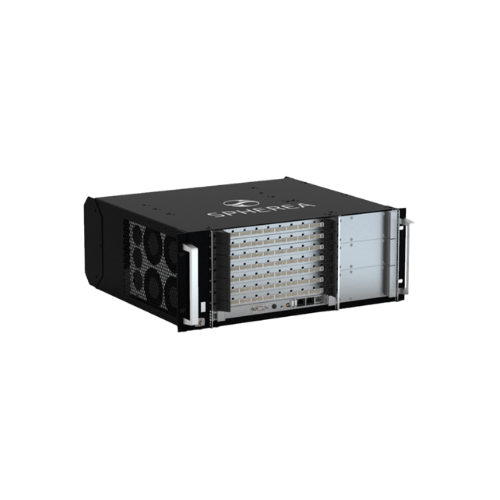
DITE – HiL Test Platform

Integrated, real-time HiL hardware platform for embedded and control system validation.

  • Runs real-time plant models with native MATLAB/Simulink and SCADE integration
  • Modular, multi-node architecture that scales with the program
  • Rack-mount and portable formats, including ARINC 600 for airborne use
See the system
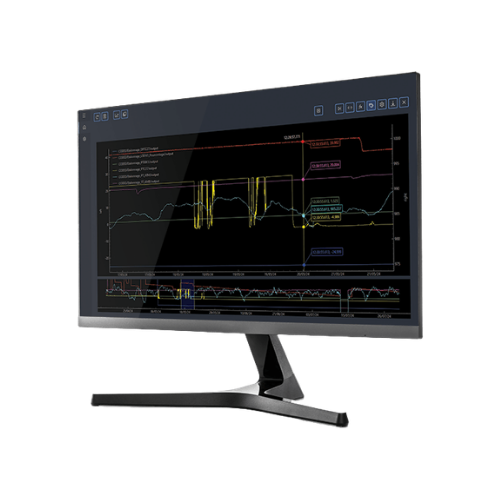
U-Test Monitor

U-TEST – SiL Test Platform

Real-time test and simulation environment for SiL and HiL.

  • Executes models and manages real-time test sequences
  • Bridges software-in-the-loop and hardware-in-the-loop on one environment
  • Open to third-party tools and COTS instrumentation
  • Integrates models from MATLAB/Simulink, FMI 2.0 / 3.0, AmeSim and SCADE

Discuss Your HIL Test Requirements

Tell us where your program is today and what you need to validate. An Averna HiL test engineer can help you scope a system that fits your timeline and your controller architecture.

Contact us

Validation Capabilities of Averna’s HIL Systems

Averna's HIL capability is a set of test functions assembled into one program rather than sold piece by piece. Each building block below is combined and scaled to fit the system under test and the conditions it must survive.

Real-Time Simulation and System Modeling

Meaningful HIL results depend on a plant model that reacts the way the real environment would. Averna's hardware and software test engineers bring deep, certified expertise across the real-time test toolchains these programs rely on, including LabVIEW, VeriStand, TestStand, and MathWorks SimuLink and MATLAB.

You receive a closed-loop environment where the device under test sees realistic stimuli at real-world timing, so behavior that would otherwise appear only in the field can be reproduced and studied in the lab.

Signal Interfacing & Fault Injection

A HIL bench is only as realistic as its interface to the hardware. Averna manages analog and digital I/O with the signal conditioning needed to match each controller's electrical characteristics. 

Fault injection sits at the core of this layer: open circuits, shorts, sensor dropouts, and bus errors are introduced on demand to verify that the system detects them and responds safely. You get evidence of how your product fails, not just proof that it works, and the data feeds a failure analysis that traces intermittent defects back to a root cause.

Automated Test Execution and Regression Testing

Manual validation does not scale across the thousands of conditions a critical system has to consider. Averna automates test sequences so they run unattended and repeat identically on demand. Regression testing then confirms that each new software build still passes everything the previous one did, and requirements traceability ties every result back to the specification it verifies, which keeps test coverage visible throughout the program.

Communication Protocol Support

The HIL platform should speak the controller's language. Averna's systems interface with the buses common to embedded and avionics architectures, and the platform is built to extend to others as a program requires.

Domain

Examples of supported interface

Automotive

CAN, LIN, Automotive Ethernet, FlexRay

Aerospace & Defense

ARINC 429, AFDX, MIL-STD-1553

General

Analog and digital I/O, Ethernet, OPC UA, MQTT, Modbus


Case Study

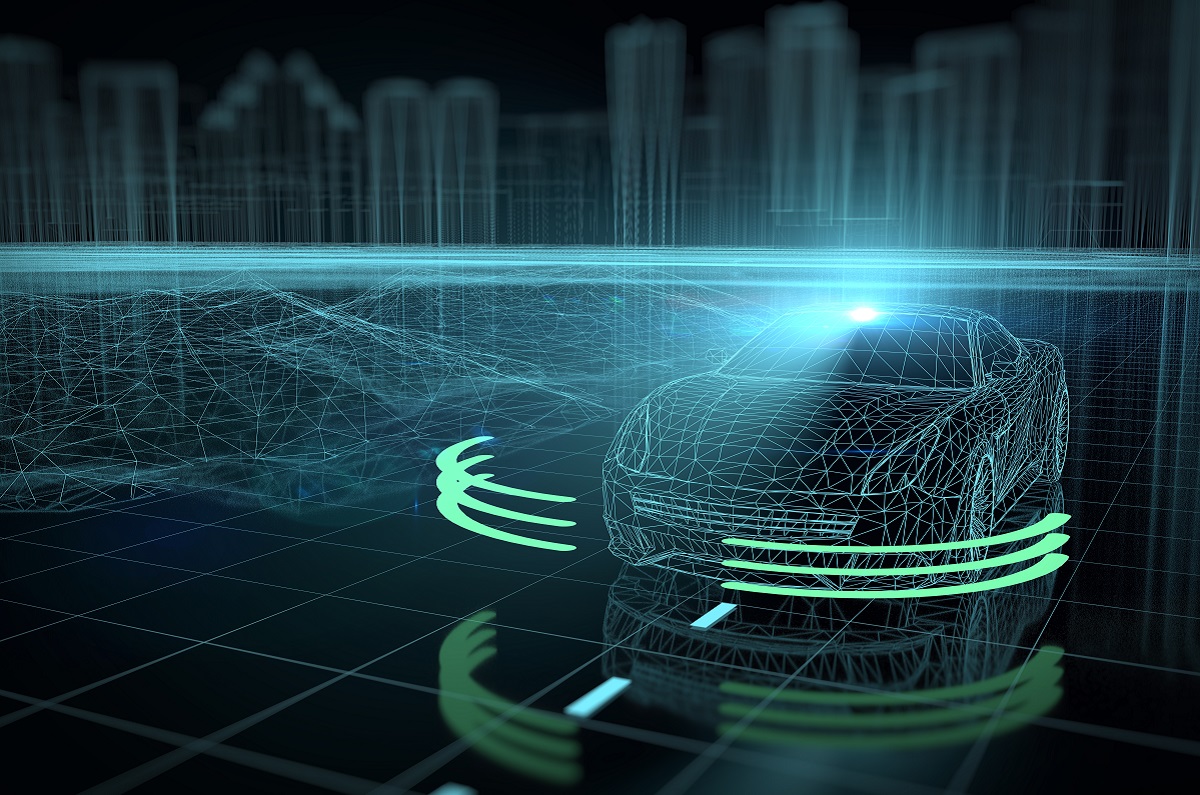
Sensor Fusion XIL Test Platform for ADAS & Autonomous Driving

Self-driving car
A leading automotive OEM partnered with Averna to bring more control and repeatability to its sensor fusion validation through HIL simulation.
  • A HIL platform combining recorded data replay and scenario-based simulation to enable continuous, controlled validation across real and virtual environments
  • Real-time multi-sensor stimulation (radar, camera, ultrasonic) to replicate coherent perception inputs at the system level
  • Closed-loop integration with vehicle ECUs and automotive networks to dynamically adjust test conditions based on system responses
Averna enabled faster, more predictable validation cycles by making hardware-in-the-loop testing scalable, reproducible, and closer to real-world conditions.

Accelerate Validation with HIL Testing

The most successful development programs do not wait until hardware integration to discover system behavior. They build validation into the development process from the beginning. HIL makes that possible by giving enineers a repeatable environment where they can evaluate performance, inject faults, verify requirements, and improve designs long before products reach the field.

Talk to Averna about building your own strategy.