Functional Testing for Manufacturing Quality

In production, the real challenge is not only to confirm that a product is built correctly, but to verify that it behaves according to the specification.

Functional testing in manufacturing verifies that a product functions as intended under real-world operating conditions. For example, it confirms that the complete system powers up correctly, responds to inputs, communicates properly, and completes the tasks the product is intended to do before shipment.

Averna develops automated functional test systems that combine hardware instrumentation, software control, fixturing, machine vision and production data capture in one manufacturing-ready system. These systems help manufacturers validate real product behavior quickly, while improving coverage and supporting traceability across the line.


Functional Test Systems with Averna

Our functional test systems connect product requirements, test coverage, automation logic, and manufacturing constraints from the first design stage.

  1. 1. Requirements Mapping & Test Coverage Definition

    We begin by defining the functions to validate, the interfaces to exercise, the conditions to reproduce, and the limits that determine pass or fail. This early mapping keeps the test strategy focused on product risk, production needs, and the level of coverage required to release each unit with confidence.

  2. 2. System Architecture, Instrumentation, & Fixturing

    Once requirements are clear, we build the test architecture around the product’s electrical behavior, communication needs, mechanical interface, and throughput targets. Instrumentation, switching, fixturing, and software are selected as one coherent system so the station remains accurate in manufacturing use.

  3. 3. Deployment, Optimization, & Production Support

    A functional test station creates value only when it performs consistently on the line, under real operating conditions and real production demands. Averna supports deployment, sequence refinement, limit tuning, and ongoing optimization.

  4. 4. Continuous Monitoring & Preventive Maintenance

    Beyond product verification, functional testing should provide the data needed to understand what is happening on the line and support better long-term control of production. Our smart systems can track patterns and anomalies that indicate when maintenance on manufacturing equipment may be required. This proactive approach allows our customers to plan ahead and avoid expensive production shutdowns.

  5. 5. Scalable Deployment

    As the market fluctuates and requirements change, it is important to have the ability to scale up (or scale down) to accommodate the upcoming demand. Our platforms are designed to capture that manufacturing data in a way that supports traceability and makes broader deployment easier.

Functional Test Applications Across Industries

Functional test systems support products that require verified system response and verified interface integrity under production conditions for every industry.

Automotive & EV Electronics

Validation of device under test (DUT) behavior, communication, power-up sequences, and embedded logic under production conditions, with end-of-line automation, traceability, and fast cycle times.

Battery & Energy Storage Systems

Functional verification of battery cells, modules, packs, racks and control electronics, including safety checks, communication, performance validation, and end-of-line release criteria.

Consumer Electronics & Control Systems

Test systems for controllers, I/O modules, power electronics, and machine interfaces where stable performance, communication integrity, and production traceability are essential.

Aerospace & Defense Electronics

Functional verification of complex product assemblies where behavior, interface integrity, and dependable test execution matter as much as throughput.

Telecom Infrastructure

Functional test systems for network equipment, communication modules, and high-speed electronic assemblies where interface integrity, signal behavior, and reliable system response are critical in production.

Ready to Discuss Your Test Requirements?

Whether you are defining a new station or improving an existing one, we help turn test requirements into production-ready systems.

Contact us

Key Functional Test and Measurement Capabilities

The value of a functional test system depends on its ability to interact with the DUT in meaningful ways and turn those results into clear production decisions. 

Functional Circuit Test (FCT) for PCBAs

FCT for PCBAs verifies correct end‑to‑end electrical and logical behavior of an assembled board under powered operation. FCT validates power‑up sequencing, signal integrity, communications, and hardware‑firmware interaction to ensure the PCBA meets functional specifications before system integration or production release.

Power, I/O, & Signal Response

Functional testing often begins with the core aspects of system behavior: power-up, output stability, input response, and signal integrity across analog and digital channels. By measuring how the product reacts to defined stimuli, manufacturers can confirm that the unit behaves as expected before it moves forward on the line.

Communication & Embedded Control Validation

Many products also require validation of communication paths, embedded logic, and firmware-driven behavior. A functional test system can exercise communication buses, confirm command-response sequences, verify interface integrity, and ensure that the product moves through its expected operating states. 

Automated Sequencing & Verdict Logic

A production-ready functional test system must execute each step in the correct order and apply limits consistently from one unit to the next. Automated sequencing helps: 
  • Standardize execution  
  • Reduce operator dependency  
  • Generate clear pass/fail verdicts based on actual product behavior 
  • Store historical data for simplified production tracking 

Data Capture & Production Traceability

Functional testing also generates useful data beyond the immediate test result. When captured in a structured way, this information strengthens traceability and helps teams investigate recurring issues. It also provides a stronger foundation for monitoring performance over time.
Case Study

Functional Testing of Robotic Surgical Systems

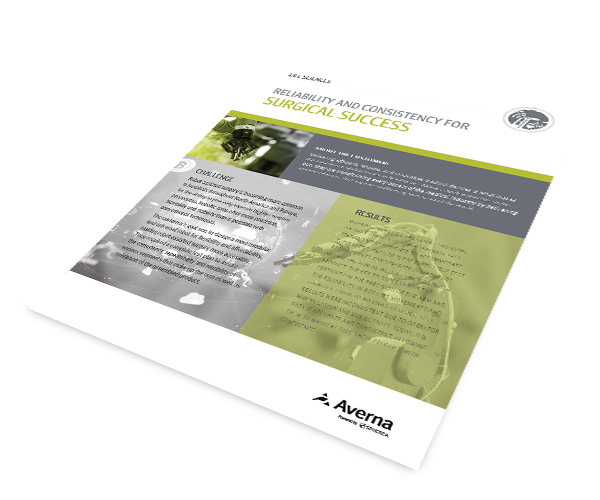
Cover - Reliability and Consistency for Surgical Success

In the medical device industry, a manufacturer of robotic surgical systems partnered with Averna to validate the functional performance of a Robotic‑Assisted Surgery (RAS) arm used in critical applications. The objective was to eliminate operator‑induced variability and ensure consistent, repeatable measurements across the full system lifecycle.

  • Structured functional validation across subassemblies and full system, covering motion control, brake engagement and actuator response under real operating conditions
  • Sensor-based measurements enabling precise position tracking, repeatability and load response validation, replacing subjective manual testing methods
This approach standardizes functional validation for complex robotic systems, ensuring consistent behavior, reliable motion performance and repeatable results across production and validation stages.
Positioning Accuracy (laser-based)
Trajectory repeatability

Partner with a Functional Testing Solutions Provider Built for Manufacturing

Averna develops automated functional test systems that connect engineering requirements with production performance. From initial architecture to deployment and long-term evolution, we help manufacturers build platforms that support reliable product validation at scale.