Understanding ADAS and Autonomous Driving Validation

Advanced driver assistance systems (ADAS) help vehicles perceive their surroundings and assist drivers in responding to road conditions. These systems combine multiple sensing technologies with embedded software that interprets the environment and supports driver decisions in real time. ADAS testing focuses on validating how these sensors and algorithms interact in real driving scenarios.
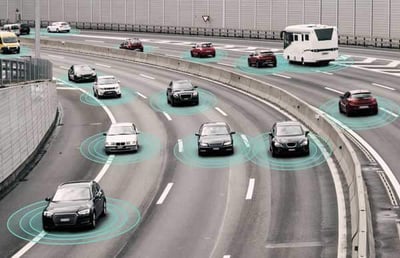
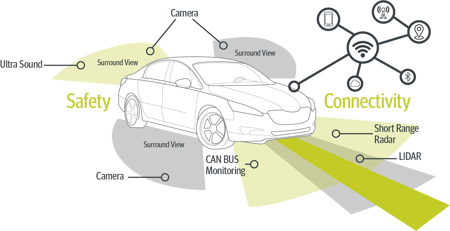
This combination of sensors includes:

Autonomous Self-Driving

  • Radar sensors that measure distance and relative speed of nearby objects.
  • LiDAR systems which generate detailed spatial information. This helps detect obstacles and road features.
  • Camera systems to recognize objects and enable the identification of vehicles, pedestrians, lane markings and traffic signs.
  • Ultrasonic sensors commonly used for short-range detection in applications such as park assist.

In addition to onboard sensing technologies, many modern vehicles also rely on V2X communication to exchange information with nearby vehicles or road infrastructure. This additional layer of data can help anticipate hazards beyond the direct field of view.

Key Challenges in Testing Driver Assistance Systems

illustration of a person using their phone while about to cross the road where there is an autonomous driving vehicleADAS and autonomous driving functions must operate reliably in a wide variety of situations:

  • Heavy or urban traffic
  • Variable weather conditions
  • Different road or infrastructure materials
  • Complex interactions between vehicles and pedestrians

Functions designed to assist the driver and improve road safety — such as ACC, AEB, LKA and Park Assist — must also meet automotive safety requirements and system integration constraints.

Averna’s Approach to Validation and System Integration

Averna has extensive experience in ADAS and autonomous driving validation. For years, we have supported leading OEMs and Tier‑1 suppliers with fully customized automotive test solutions designed around specific engineering requirements.

Our teams develop validation platforms covering the entire testing lifecycle, allowing manufacturers to work with a single partner from early development to system integration and production validation.

Among the most essential validation activities are:

  • Large-scale scenario validation using simulation and XIL environments
  • System integration testing within vehicle architectures
  • Perception validation for radar, camera, LiDAR and ultrasonic sensors
  • Real-world validation using proving grounds and record-and-playback workflows
  • Production testing and calibration of perception sensors before deployment

These activities represent only a portion of the validation capabilities required.
Accelerate ADAS System Validation

Averna develops test platforms that allow engineering teams to evaluate ADAS systems under controlled and repeatable conditions before road deployment. You are changing the automotive landscape, and we want to change it with you.  

Technologies Behind Reliable Driver Assistance Testing

Advanced driver assistance systems rely on a wide range of sensing technologies that require extensive object simulation and careful validation of sensor fusion algorithms.

Pure Simulation (SIL) and XIL Testing

Autonomous driving systems cannot be validated through road testing alone. Simulation allows ADAS algorithms to run in configurable virtual environments and expands coverage dramatically.

Hardware‑in‑the‑Loop (HIL) testing introduces real ECUs into the simulation. Controllers receive synthetic sensor inputs and their reactions are evaluated in real time, enabling verification before integration into a vehicle.

These steps are often combined in a XIL validation framework (Model, Software, Hardware, Driver or Vehicle‑in‑the‑Loop), allowing gradual introduction of system components while maintaining control over test conditions.

Record and Playback on Proving Grounds

Real‑world data offers unmatched realism. While SIL and HIL provide excellent coverage, simulations cannot capture every nuance of the real world. Record‑and‑playback workflows allow engineers to validate sensor performance using true traffic data.
Thanks to these workflows, engineers can:

  • Capture real sensor data
  • Validate systems on proving grounds
  • Identify edge cases

Radar Sensor Testing and Perception Sensors

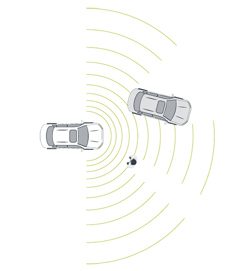
Automative Radar Test - schematic diagram

Test environments evaluate how radar, LiDAR, camera and ultrasonic sensors interpret the driving scene.

Radar validation relies on physics‑based simulation that models signal propagation and reflections. Engineers analyze sensor responses by adjusting distance, angle or relative motion.

Physical factors such as bumper materials or paint can alter radar signals, and sensor synchronization becomes essential when data is fused with other perception inputs.

Validation also requires far‑field conditions for accurate electromagnetic behavior. Modern automotive radars operate across wide bandwidths, requiring advanced RF testing methods.


Camera Sensor Validation and Video Pipeline Testing

Camera modules play a crucial role in perception. Validation targets both optical performance and the reliability of the video transmission pipeline.

Automotive ADAS Lidar illustration
 

Validation activities include:

  • Calibration testing
  • MTF measurement
  • Image sharpness verification
  • Video pipeline validation

Automotive cameras use high‑speed interfaces such as GMSL2 or FPD‑Link III. Serializer/de‑serializer components transport image data while configuration commands pass through I2C or GPIO.

Platforms may also monitor power delivery through PoC and evaluate signal integrity via connectors such as FAKRA. In some cases, FPGAs emulate or process video streams.

Active Alignment of Camera Modules

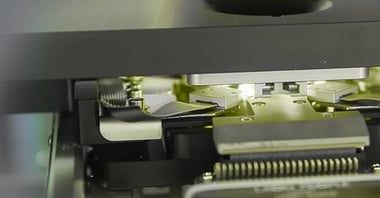
Active alignment is a high‑precision assembly process that optimizes lens positioning using real‑time sensor feedback. Unlike passive alignment, it adjusts focus, tilt, centration, rotation and boresight continuously for micron‑level accuracy.

Camera assembly - image section

Active alignment systems are essential for producing high‑quality camera modules. Even small deviations can cause blur, depth errors or geometric distortions. Precision must be maintained throughout the vehicle’s lifetime despite environmental exposure.

  • Accurate depth perception
  • Clean lane edge detection
  • Reliable object classification
  • Proper geometric calibration for surround‑view stitching
  • Consistency across units for multisensor fusion

LiDAR and Ultrasonic Testing

LiDAR sensors create 3D environmental maps. Validation focuses on optical characterization, object simulation, controller behavior and distance/angle calibration.

Ultrasonic sensors are mainly used for parking. They measure the time of flight between pulse emission and echo return.

Test systems can simulate:

  • Objects at different distances
  • Echo delays
  • Amplitude variations

This enables validation of park‑assist features and short‑range detection systems.

Environmental and EMC Testing

ADAS sensors must remain reliable across wide environmental conditions. Platforms simulate temperature variations, humidity, and vibration to ensure stability.

EMC testing evaluates sensor behavior under electromagnetic interference, ensuring stable performance in complex vehicle electronics.

Sensor Production Testing and Calibration

Modern ADAS relies on synchronized radar, LiDAR, camera and GNSS inputs. Production testing validates alignment and ensures perception remains stable when multiple inputs interact.

Platforms inject sensor signals, monitor system behavior, and verify calibration accuracy before deployment.

Case Study: Sensor Fusion XiL Validation

Averna developed a Sensor Fusion XiL test platform combining simulation, record‑and‑playback, and closed‑loop HIL validation within one environment.

The platform injects synchronized sensor inputs into ADAS ECUs while monitoring responses under controlled traffic scenarios.

Key capabilities include:

Scenario generation for complex traffic
Record‑and‑playback workflows with high‑bandwidth datalogging
Object simulation for radar, LiDAR, ultrasonic sensors
Video stream injection over automotive interfaces
Integration with vehicle networks (Ethernet, CAN, LIN, FlexRay)
Sensor fusion ECU validation with synchronized data
V2X and GNSS integration for connected‑vehicle scenarios

This architecture enables engineers to validate fusion and AD functions in controlled yet realistic environments before road deployment.

jeff-buterbaugh-averna-1

 "Our engineers have integrated diverse technologies into a unified test platform. This enabled our customer to deploy customized ADAS validation solutions across their organization. This modular, flexible, and scalable approach accelerated time to market and helped avoid the costs associated with large investments in single-purpose equipment." 

Build Safer ADAS Systems with Proven Testing

Speak with our test engineering team to discuss how a dedicated ADAS testing architecture can support your validation strategy and system performance targets.