
Support
    • Smart ManufacturingSmart manufacturing solutions that connect test systems, data, and automation to enable real-time visibility and predictive insights.
    • Prototyping & ConsultingEarly-stage Design for Testability (DFT) analysis, flexible prototyping, and proof-of-concept validation.
    • Automated Test Solutions (ATE)High-speed benchtop and cabinet-level verification, validation and testing.
    • In-Line Test SystemsContinuous conveyor line automated test or inspection with zero-cycle interruption.
    • Precision Assembly & ProductionAutomated assembly solutions with advanced robotics, inspection, and process control for zero-defect manufacturing.
    • Test System ReplicationGlobal multi-site deployment of identical test systems with obsolescence control.

    Bring Your Quality to the Next Level.

    Explore scalable quality solutions engineered for the world’s most demanding high-reliability products and automated manufacturing environments.

    Talk to an expert
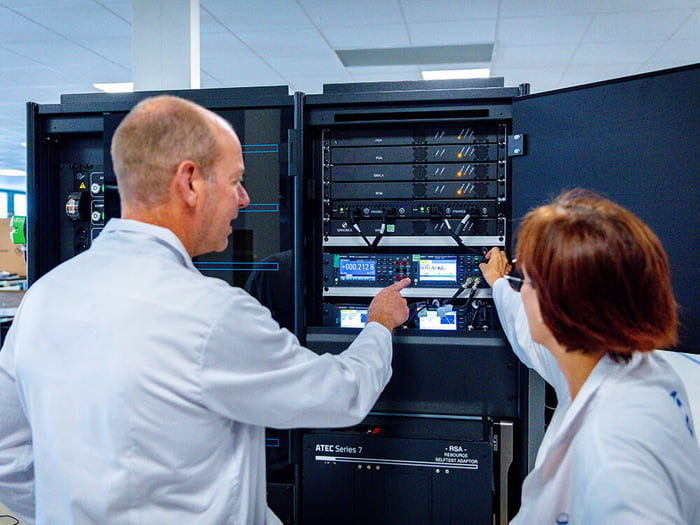
    Engineers manipulating an ATEC ATMOS test station

    Our flexible test platforms are built on proven architectures with integrated IP, enabling maximum reuse and faster deployment for product design, manufacturing and support.

    Find the right platform for your application
    Explore all RF instruments
    Explore all software solutions
    Knowledge & Engineering

    Visit our Resource Center for videos, white papers, brochures & eBooks

    Resource Center
    • About usAverna Powered by Spherea is recognized as a worldwide Test & Quality Engineering leader, delivering innovative, end-to-end solutions that accelerate time-to-market and ensure flawless performance.
    • Technology PartnersTo ensure we provide the best possible solutions and integration services to our customers, we are strategically aligned with the world’s top test and technology companies.
    • ESG & SustainabilityWe are more committed than ever to honor our role as an employer, supplier, and customer by contributing positively to our communities.
    • CareersJoin our team full of incredible talent and inspire the future of test. Our people are who make us who we are and we demonstrate this through our values everyday!

    Bring Test to the Next Level

    Our team of 1800 specialists are passionate about delivering engineering innovation, zero-defect quality architectures, and mission-critical automated testing systems across the product lifecycle.

    60+ YearsTest Experience
    20,000+Completed Projects
    Download our Corporate Profile

    A Smarter Environmental Screening Process for Production Reliability

    Not every failure is visible at end-of-line. Latent defects can survive initial testing, then emerge later as early life failures in the field. It is important to consider where these products will be and how they will be treated...to the extreme. That is where ESS creates value.

    ESS is a reliability screening method that applies controlled environmental stress to expose hidden failure mechanisms before products reach the field.

    Averna develops production screening test solutions and automated test platforms that align screening with real product risks and reliability goals. The result is a more effective environmental screening process with better defect detection; and reduced Cost of Quality (CoQ).


    What ESS actually finds

    • Solder joint cracks and cold solder joints
    • Marginal components and component defects
    • Assembly-induced stress and PCB stress failures
    • Intermittent electrical faults that escape initial testing
    • Reactions to real-world or extreme environmental conditions

    Averna’s ESS Procedure

    Every ESS implementation starts with one question: what failures are we trying to accelerate without damaging good units? We design screening strategies that target real manufacturing defects while preserving product integrity and production throughput.

    1. Phase 1

      Product & Risk Assessment

      In collaboration with our customers. we begin by reviewing the product architecture, manufacturing process, and likely defect mechanisms. This helps define where latent failures are most likely to appear and what stresses are relevant.

    2. Phase 2

      ESS Profile Definition

      If the screening profile is not already defined (for example in mission critical applications), we develop one based on the product’s real operating, handling, storage, and transportation conditions. Stress levels are selected to precipitate defects without damaging conforming units.
    3. Phase 3

      Controlled Stress Application

      The selected environmental stresses are applied in a controlled and repeatable sequence. Depending on the DUT, this may include temperature cycling, random vibration testing, high temperature humidity, shock, HALT/HASS testing, radiation exposure, vacuum testing, or combined stress conditions.

    4. Phase 4

      Functional Verification & Feedback

      Units are verified before, during, and after screening to confirm performance and identify failures. Screening data can then be fed back into manufacturing and quality teams to support corrective action and reliability improvement.

    Custom ESS Test Chambers for your Product Line

    Whether you need a standalone ESS chamber, an integrated vibration and thermal platform, or a fully automated production screening solution, Averna can help define the right architecture for your line.

    Discuss your ESS Application

    Developing Robust ESS Profiles & Systems

    Environmental Stress Screening is not meant to validate a design from scratch. Its role is to precipitate latent manufacturing and workmanship defects before the product reaches the field. To do that effectively, the screening profile must be built around the product’s actual lifecycle conditions.

    That includes transportation shocks, storage conditions, handling events, and in-service operating environments. The device under test is configured to match those phases as closely as possible, whether that means screening in shipping configuration or under powered operational conditions.

    Screening parameters

    Screening effectiveness depends on how the profile is engineered. Temperature range, dwell time, transition rate, vibration intensity, test duration, and sequencing all influence whether the screen will activate marginal defects or simply add time without improving defect detection.

    Selecting the Right Stress Mechanisms

    Among the available stress mechanisms, thermal cycling and random vibration are often the most effective at precipitating latent defects.

    • Temperature cycling can expose weaknesses linked to material expansion mismatch, marginal interconnects, or assembly-induced stress.
    • Random vibration is especially valuable for revealing workmanship issues and mechanically sensitive failure modes that may otherwise remain intermittent until field use.
    • Additional stresses such as thermal shock, humidity, sine vibration, multi-axis vibration, or pressure may also be incorporated when they reflect the product’s actual environment.

    Pass/Fail Logic: ESS Paired with Functional Validation

    ESS is only meaningful when paired with verification. Functional testing and visual inspection should be performed before, during, and after screening to confirm that the unit remains within specification and that stress has not pushed it beyond its design limits. A unit showing cracked boards or other signs of over-stress is considered a failure even if it still appears to function electrically.

    Organized Test Data for thorough Gage R&R

    Throughout ESS, Proligent™ is available to simplify gage R&R by automatically organizing test data across units, cycles, and stress conditions.

    By centralizing results and preserving context such as configuration, operator, and test setup, Proligent reduces the manual effort required to prepare data for repeatability and reproducibility studies. This allows teams to quickly assess measurement consistency during ESS and focus on results rather than cleaning data.

    Case Study

    ESS for Mission‑Critical Military Electronics

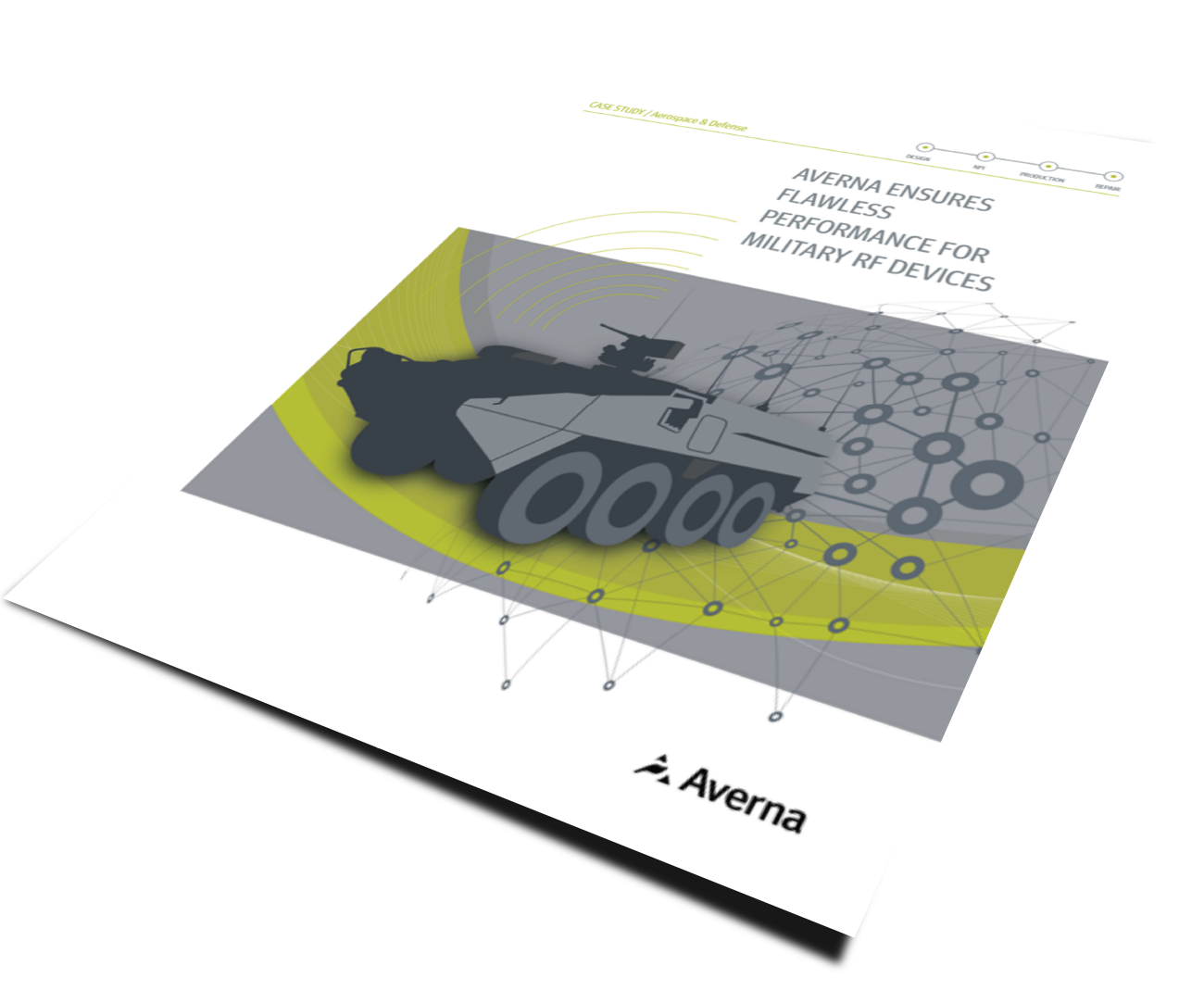
    Cover - Averna Ensures Flawless Performance for Military RF Devices

    In the aerospace and defense sector, a leading military equipment supplier partnered with Averna to integrate Environmental Stress Screening (ESS) into the validation of RF communication and power distribution systems.

    The goal was to detect latent defects early and ensure reliable performance under extreme operational conditions, including extreme temperatures, vibration, shock, and electromagnetic stress found in land‑based military vehicles.

    • ESS applied at the Circuit Card Assembly (CCA) level, prior to final assembly, enabling early defect detection.
    • Automated batch and parallel execution using NI TestStand™ architecture to maintain production throughput.
    This approach improves field reliability by identifying defects before final integration, while maintaining production efficiency through automated and scalable test workflows.

    Ready to Build the Right ESS Screening Test Strategy?

    Averna designs environmental stress screening chambers around real manufacturing risks and line constraints, so you can reduce field failures without slowing production. Our +25 years of experience can assure you we’ll be the right partner.