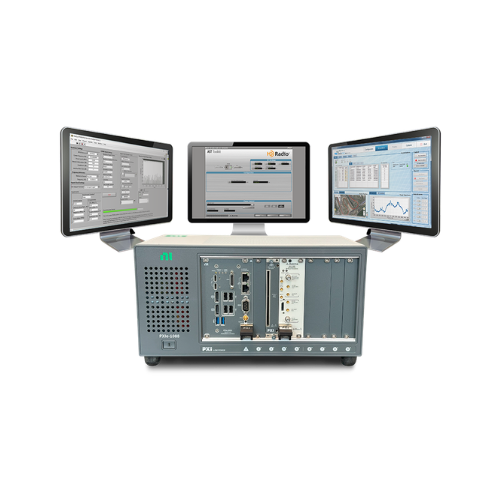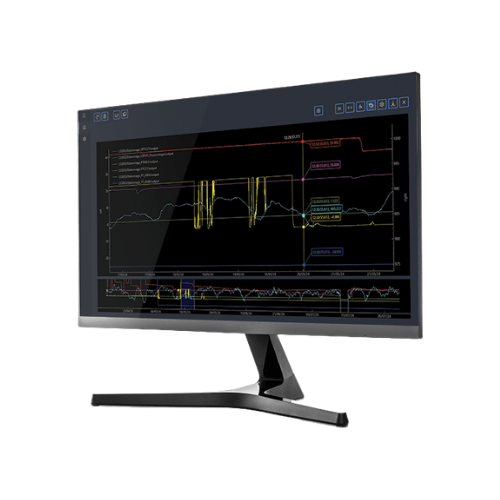
• Smart ManufacturingSmart manufacturing solutions that connect test systems, data, and automation to enable real-time visibility and predictive insights.
  • Prototyping & ConsultingEarly-stage Design for Testability (DFT) analysis, flexible prototyping, and proof-of-concept validation.
  • Automated Test Solutions (ATE)High-speed benchtop and cabinet-level verification, validation and testing.
  • In-Line Test SystemsContinuous conveyor line automated test or inspection with zero-cycle interruption.
  • Precision Assembly & ProductionAutomated assembly solutions with advanced robotics, inspection, and process control for zero-defect manufacturing.
  • Test System ReplicationGlobal multi-site deployment of identical test systems with obsolescence control.

Bring Your Quality to the Next Level.

Explore scalable quality solutions engineered for the world’s most demanding high-reliability products and automated manufacturing environments.

Talk to an expert
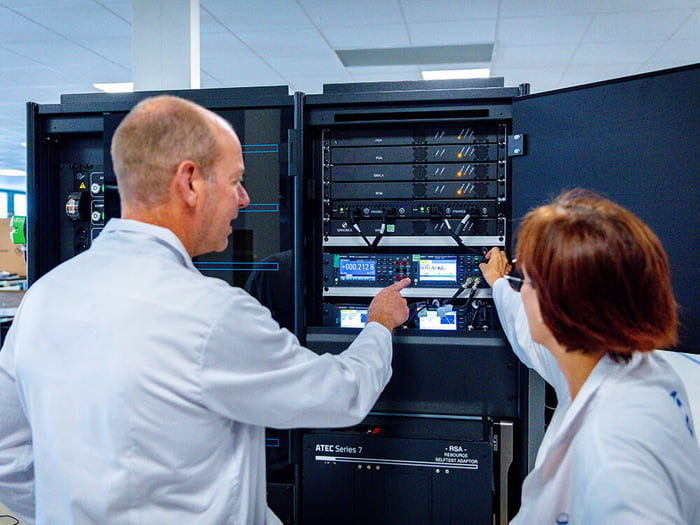
Engineers manipulating an ATEC ATMOS test station

Our flexible test platforms are built on proven architectures with integrated IP, enabling maximum reuse and faster deployment for product design, manufacturing and support.

Find the right platform for your application
Explore all RF instruments
Explore all software solutions
Knowledge & Engineering

Visit our Resource Center for videos, white papers, brochures & eBooks

Resource Center
  • About usAverna Powered by Spherea is recognized as a worldwide Test & Quality Engineering leader, delivering innovative, end-to-end solutions that accelerate time-to-market and ensure flawless performance.
  • Technology PartnersTo ensure we provide the best possible solutions and integration services to our customers, we are strategically aligned with the world’s top test and technology companies.
  • ESG & SustainabilityWe are more committed than ever to honor our role as an employer, supplier, and customer by contributing positively to our communities.
  • CareersJoin our team full of incredible talent and inspire the future of test. Our people are who make us who we are and we demonstrate this through our values everyday!

Bring Test to the Next Level

Our team of 1800 specialists are passionate about delivering engineering innovation, zero-defect quality architectures, and mission-critical automated testing systems across the product lifecycle.

60+ YearsTest Experience
20,000+Completed Projects
Download our Corporate Profile

Automotive Radar is a Measurement Challenge

Expertise_Automative radarAutomotive radar is not just another electronic subsystem to validate; its performance depends on signal quality, timing, alignment, environmental control, and stable test conditions. Even small variations in setup, chamber integrity, DUT positioning, or RF isolation can directly affect result accuracy.

That complexity becomes even more critical in production, where test systems must deliver the same level of confidence across thousands of units. Manufacturers are not only looking to confirm that a radar module powers on or communicates correctly. They also need to verify range, velocity, and angle performance, ensure calibration remains stable, and support demanding takt times without compromising reliability.

For that reason, automotive radar testing must be approached as a combined RF, automation, and data challenge. The test environment, the handling strategy and the software architecture directly affect results. These elements should be designed together.
How Averna Approaches Automotive Radar Testing

Averna approaches automotive radar testing as a complete production and validation system.

  1. Requirements & Test Coverage

    Every radar program starts with a clear definition of what must be measured, what level of precision is required, and how test coverage fits into the broader manufacturing strategy. This includes aligning the test scope with product requirements such as range resolution, Doppler-based velocity measurement, angle accuracy, RF integrity, communication, power checks, and calibration needs.

  2. RF & Chamber Design

    Because radar performance depends heavily on the test environment, RF and chamber design are core elements of the solution. Averna develops systems that incorporate anechoic chambers and controlled RF conditions to preserve measurement integrity and minimize the effects of leakage, reflections, external interference, and unwanted echoes that can degrade radar signal processing and repeatability.

  3. Automation & Handling

    Fast and repeatable handling is essential in automotive radar production. To reduce operator dependence and improve consistency, Averna integrates automated test solutions that support precise DUT positioning and efficient station flow. This may include robotics integration, dedicated fixturing, and automated handling mechanisms designed around the product and the takt time target.

  4. Data, Validation & Scalability

    Averna builds software architectures that support real-time acquisition, test sequencing, result logging, and long-term traceability, giving manufacturers better visibility into product behavior and station performance.

Our teams bring deep expertise in LabVIEW, PXI-based architectures, and custom test software development, allowing us to adapt the solution to both high-frequency test complexity and factory integration requirements. We also support data collection and traceability strategies through Proligent™, helping customers connect radar test results to broader quality and manufacturing insights.

Accelerate Automotive Radar Validation

Averna helps you validate automotive radar with greater confidence, from controlled measurement conditions to production-ready test systems.

Discuss Your Test Requirements

Technical Capabilities for Automotive Radar Testing

Automotive radar testing relies on a combination of RF precision, controlled target simulation, and stable angular coverage. In practice, these capabilities must work together within a single test environment to support both functional validation and production constraints.

The table below outlines an example of technical capabilities delivered by Averna in automotive radar test systems. It reflects an integrated ATE designed to support over‑the‑air validation, multi‑object scenarios, and repeatable RF measurements across the sensor field of view (FOV).

Example radar test system capabilities delivered by Averna

Frequency coverage 24 GHz (legacy) and 75–82 GHz, with up to 4 GHz instantaneous bandwidth 
Number of objects (single AoA) One to four emulated targets 
Number of objects (multiple AoAs) Up to four independent targets on separate angles 
Emulated object range

3 m to 300 m 

Range resolution 5 cm 
Doppler range / resolution ±500 km/h (75 kHz) / 0.1 km/h (7.5 Hz) 
RF measurements EIRP, occupied bandwidth, chirp analysis, linearity
Angular coverage – azimuth ±100° with ±0.05° accuracy 
Angular coverage – elevation ±20° with ±0.8° accuracy 

These capabilities enable controlled validation of radar behavior across distance, velocity, and angle, while supporting the repeatability and stability required for production‑level testing. The following sections describe how these capabilities are applied to FMCW analysis, OTA testing, antenna characterization, and production validation.

FMCW and Doppler-Based Measurement

Most automotive radar systems rely on FMCW (Frequency-Modulated Continuous Wave) principles to extract range and velocity from reflected signals. In practice, the test system must verify how accurately the sensor estimates distance and motion—not just whether it detects a target.

Doppler processing is central to velocity estimation, and its quality determines how reliably the radar interprets moving objects, especially when targets are close in speed or position. A robust test approach must therefore evaluate performance under controlled conditions with sufficient precision to reveal drift, instability, or limited resolution.

OTA Testing and Target Simulation

Over-the-air testing is often required because automotive radar cannot be assessed accurately through electrical checks alone. The sensor must be evaluated in conditions that reflect how it emits, receives, and processes RF energy in operation.

Radar target simulators are used to reproduce controlled scenarios without relying on physical targets. This makes it possible to test sensor response with better repeatability, tighter control of conditions, and less dependence on manual setup. For production environments, this approach also helps reduce variability between stations. Where relevant, it can also support radar interference testing by helping teams assess sensor behavior in the presence of competing RF signals or more complex operating scenarios.

Antenna Characterization and MIMO Architectures

Antenna behavior is a key contributor to radar performance. Test coverage may include antenna characterization to assess emission patterns, unit-to-unit consistency, and signal quality under defined conditions. Depending on the radar design, this can also involve evaluating parameters such as EIRP, occupied bandwidth, and spurious emissions in controlled RF environments.

These requirements become more demanding with MIMO (Multiple-Input, Multiple-Output) architectures. Channel consistency and phase alignment are critical, as they directly influence beamforming and target interpretation. In such cases, the test system must do more than collect data; it must maintain the conditions required for meaningful RF comparison.

Production Validation and Compliance Support

In production, each radar unit must be verified within a limited cycle time while maintaining confidence in the result. That means the station must support functional checks, RF measurements, and calibration-related verification without introducing unnecessary variation.

Traceability also matters. Test data must remain structured, accessible, and consistent enough to support root-cause analysis, process monitoring, and broader quality objectives. Standards such as ISO 26262, IATF 16949, or ECE R10 remain the responsibility of the manufacturer, but Averna supports these efforts by designing test systems that generate reliable data, maintain traceability, and help teams structure validation activities with greater confidence.

Case Study

Production Testing for Automotive Radar

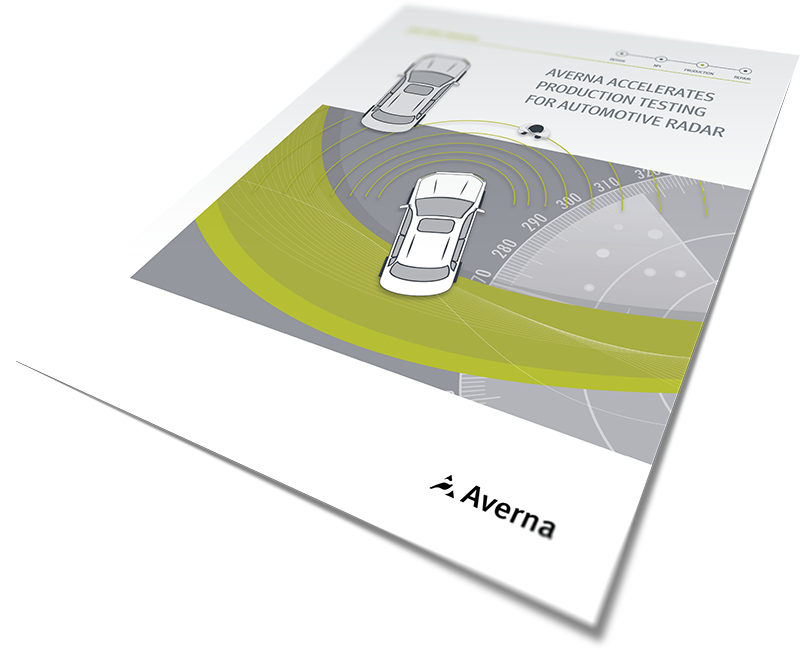
Cover - Averna Accelerates Production Testing for Automotive Radar

A leading global automotive supplier needed a more robust end-of-line test solution for automotive radar units, as its production line could not sustain 24/7 throughput due to component failures, dust and RF leakage in chambers, and inefficient manual DUT handling.

Averna designed and integrated an automated production test line with robotics, vision systems, high-bandwidth signal processing, and dust-free anechoic chambers.

  • A 6 DoF robot and anechoic chambers that provide better throughput
  • Improvement of DUT takt time and mean time between failures

Through its deep test engineering expertise, Averna significantly improved the client’s EOL test system for automotive radar units, cutting test times by 50% while ensuring substantial ongoing ROI.

24 Hrs Daily System Operation
10 000 Radar Units Tested per Chamber/Week

Move from Radar Validation to Production Readiness

Averna designs automotive radar test solutions that support accurate measurements and consistent performance on the factory floor.