
What is Bluetooth Low Energy (BLE)?
Bluetooth Low Energy (BLE) is a wireless communication technology. It is designed for short-range data exchange with low power consumption. It’s part of the Bluetooth 4.0 specification and is widely used in devices that need to run for extended periods on small batteries.
Bluetooth vs. BLE – Key Differences
 Bluetooth and Bluetooth Low Energy (BLE) are both wireless communication technologies, which serve different purposes and have distinct characteristics.
Notable differences include:
Power Consumption
The most significant difference between Bluetooth and BLE is power consumption. Bluetooth is designed for continuous data streaming and consumes more power. In contrast, BLE is designed for low-power applications and is optimized for energy efficiency, making it ideal for devices with limited power sources.
Data Rate
Bluetooth offers higher data transfer rates, which is suitable for applications requiring real-time data, like audio or video streaming. BLE, on the other hand, provides lower data rates but is sufficient for transmitting small packets of data periodically, such as sensor readings.
Range:
Bluetooth typically has a longer range compared to BLE. Bluetooth can cover distances up to 100 meters, while BLE typically operates within a range of 10 to 30 meters. The shorter range of BLE contributes to its power efficiency.
Use Cases
Bluetooth is commonly used in applications like headphones, speakers, and file sharing between devices. With its power consumption and high data rate, it is ideal for reliable audio or video streaming. BLE is prevalent in low-power devices such as fitness trackers, smartwatches, healthcare sensors, and home automation devices, where energy efficiency is crucial.
Compatibility
Bluetooth and BLE are not directly compatible with each other. However, many modern smartphones and devices are equipped with both Bluetooth and BLE capabilities, providing flexibility for various applications.
Bluetooth vs. Bluetooth Low Energy (BLE) -
|
Feature |
Classic Bluetooth |
Bluetooth Low Energy (BLE) |
|
Introduced In |
1999 |
2010 (Bluetooth 4.0) |
|
Power Consumption |
Higher (continuous connection) |
Very low (sleep mode between bursts) |
|
Data Rate |
Up to 3 Mbps (with EDR) |
Up to 1 Mbps (2 Mbps in Bluetooth 5) |
|
Latency |
Higher |
Lower |
|
Connection Time |
Seconds |
Milliseconds |
|
Battery Life |
Shorter (hours to days) |
Longer (months to years) |
|
Data Transfer Volume |
Large & continuous |
Small & intermittent |
|
Device Complexity |
Higher |
Lower |
|
Compatibility |
Not compatible with BLE-only devices |
Can coexist with Classic Bluetooth |
|
Cost of Implementation |
Higher |
Lower |

Testing Bluetooth Low Energy Devices
Testing Bluetooth Low Energy devices ensures performance, reliability, and compliance with industry standards. Since they often operate in environments with RF interference, testing validates signal integrity and connection stability. Additionally, testing is crucial for optimizing battery life, verifying functional performance, and ensuring regulatory compliance.
End-of-Line (EOL) Functional Testing
EOL functional testing is performed at the final stage of manufacturing to verify that each BLE device meets its design specifications. This includes validating connectivity, sensor accuracy, and firmware. Automated test setups often simulate real-world usage scenarios to ensure the device performs as it should before reaching the market.
RF and PHY Validation
RF and PHY validation focus on RF characteristics and the physical layer performance of BLE devices. This tests that the device transmits and receives signals within the required frequency bands and meets Bluetooth SIG standards. It also helps identify outside issues like signal degradation, poor antenna design, or interference.
Interoperability and Reliability Testing
BLE devices must interact with a wide range of smartphones, tablets, and other devices. Interoperability testing ensures that devices can connect, communicate, and maintain stable links. Reliability testing further evaluates how well the device performs in particular circumstances like fluctuating temperatures, low battery, or heavy use.
Challenges in IoT and Medical Environments
BLE testing for IoT and medical environments can be challenging since they often operate in crowded RF spaces. Signals like Wi-Fi, Zigbee, or other BLE devices can affect performance. In medical settings, accuracy and uptime are critical as the impact of error will affect a patient’s safety.
BLE Tester – Our Bluetooth LE Test Solution
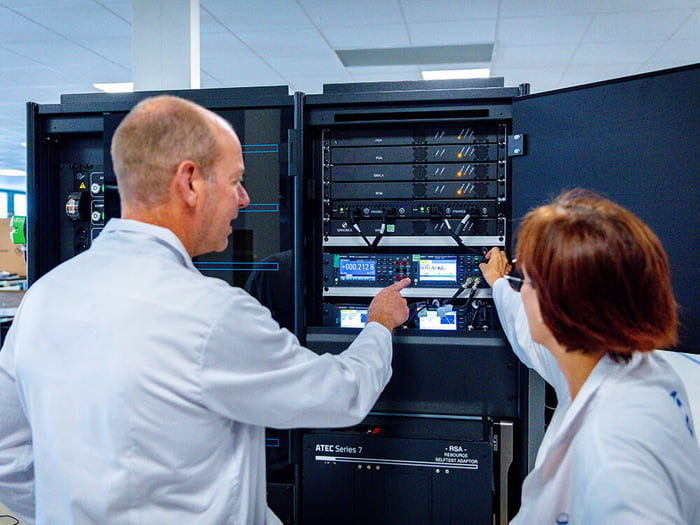
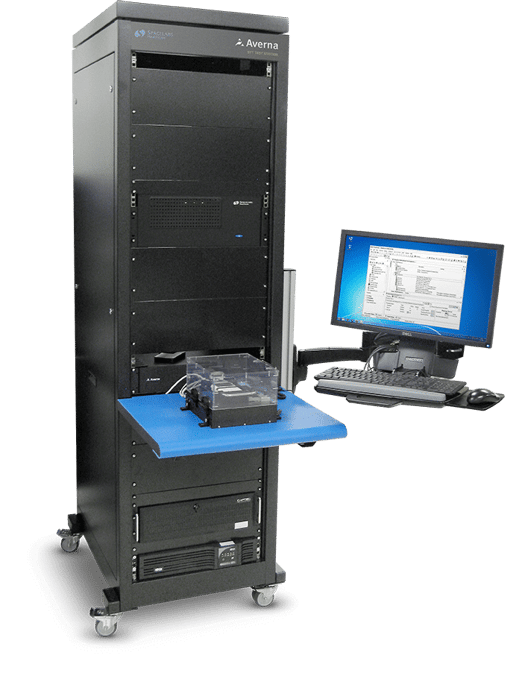
Our system is a low profile, small footprint instrument to verify Bluetooth Low Energy 5.2 and backwards comparability to V4.0. This system performs end of line (EOL) functional tests as well as parametric measurement capabilities. The DTM (Direct Test Mode) is used to allow testing the PHY by controlling the DUT to send and receive test packet sequences. It skips the host stack and communicates directly with the PHY via UART or USB/Serial communication. BLE tester can perform fundamental RF PHY tests including:
 Transmitter Test Capabilities
- Output power
- In-band emissions
- Carrier frequency offset and drift
Receiver Test Capabilities
- Receiver sensitivity
- PER report integrity
- Blocking performance
- Maximum input signal level

BLE Testing for Medical Devices
Understanding what BLE medical means is essential for product designers and manufacturers to deliver reliable, compliant, and patient-safe solutions. BLE for medical device testing is about leveraging the protocol to create smarter, safer, and more efficient healthcare solutions. Rigorous BLE testing in healthcare ensures that devices meet performance standards, regulatory requirements, and cybersecurity expectations.

Connected Medical Devices and Use Cases
BLE is widely used in connected medical devices as these devices benefit from BLE’s low power consumption. This extends battery life, and provides reliable data transmission, which is critical for continuous monitoring and timely alerts. This is crucial for devices like glucometers, pacemakers and wearables. BLE also supports secure communication protocols and adaptive frequency hopping. This is another reason it is ideal for the medical industry, where interference and data integrity are concerns.
Regulatory and Compliance Requirements
Medical devices using BLE must comply with international standards such as IEC 60601-1, ISO 13485, and FDA 21 CFR Part 820. These standards cover electrical safety, quality management, and risk mitigation. BLE testing must validate RF performance, security, and interoperability for safe operation and regulatory approval. Averna’s BLE Tester supports Direct Test Mode (DTM) for PHY-level testing, enabling manufacturers to verify signal integrity, protocol compliance, and device reliability under real-world conditions.